 PraxiLabs A virtual world of science

Last Updated on December 11, 2025 by Muhamed Elmesery
The landscape of higher education has undergone a profound transformation, and at the heart of this shift is virtual education. Far from being a temporary fix, online learning is proving to be a powerful, sustainable model that delivers significant benefits to university students worldwide.
Gone are the days when a quality education was strictly tied to a physical campus.
In this blog post, we will explore the advantages of virtual education, the importance of adapting to the evolution of education, virtual learning resources, and exploring science virtual education with PraxiLabs, among other key insights!
Table of Contents
What is virtual education?
Virtual education is a type of learning that relies on using online virtual environments that simulate the real classroom.
Virtual education has several benefits such as flexibility and accessibility, as students can learn anytime and anywhere at their pace without any risks or pressures.
Virtual education enables students and teachers to connect and interact without meeting in a real physical classroom through online digital tools.
What are the advantages of virtual education?
There are several advantages of virtual education, such as:
Promoting interactive learning instead of rote memorization
One of the most important advantages of virtual education is introducing visual, audio, and digital simulation tools that make lessons more interactive. The student is no longer just a passive receiver, but participates in activities, quizzes, and discussion forums.
Providing diverse and easily accessible educational content
Virtual education platforms offer digital libraries, instructional videos, and learning paths that students can access anytime, helping support self-directed learning.
Personalized education according to the student’s level
Using artificial intelligence and educational analytics allows teachers to assess student performance and suggest suitable learning paths for each level by using virtual education systems to enhance the effectiveness of the educational process.
Developing the role of the teacher
The teacher’s role is no longer limited to giving explanations; instead, they become a guide and facilitator of learning, using digital tools to manage the classroom, design content, and monitor student performance in real time.
Improving assessment and testing
E-tests, question banks, and interactive assignments have helped achieve more accurate and faster evaluations, with detailed performance reports for students.
Importance of adapting with the evolution of education
Adapting to the evolution of education has increasingly moved towards e-learning for the significant advantages it offers to both students and educational institutions, such as:
- Overcoming time and location constraints.
- Providing learners in remote areas with access to quality education.
- Ensuring educational continuity during crises and emergencies.
- Meeting individual learning needs and accommodating diverse learning styles.
- Supporting self-directed learning and enabling students to learn at their own pace.
- Using multimedia (videos, animations, interactive simulations) that suit different learning styles.
- Facilitating the hosting of lecturers and experts from around the world to participate in the educational process, enriching learners’ experience.
- Developing digital skills and preparing for the future.
- Facilitating continuous learning and self-education for anyone looking to develop their skills or change their career path at any stage of life.
Explore: Why the Use of Technology in Science Education Is Becoming Essential?
Close the gap between theory and practice with virtual learning
According to a study that examines the feasibility and effectiveness of combining whole-task and guided reflection educational design principles with cloud-based learning technologies to simulate the clinical psychiatric advanced pharmacy practice experience (APPE) in the classroom to help close the theory-to-practice gap.
The results of the quantitative and qualitative analyses demonstrated that students progressed in their readiness for APPEs and gained additional psychiatric pharmacy knowledge and evidence-based medicine decision making skills.
Explore: Integrating Virtual Simulation Training in the International Universities
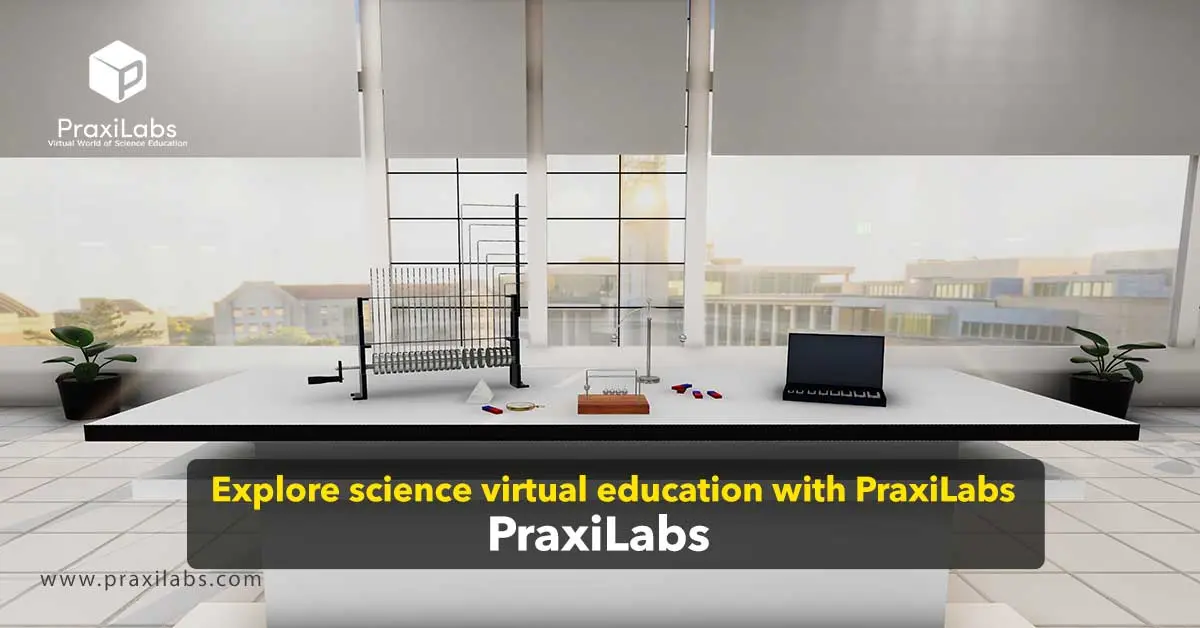
Explore science virtual education with PraxiLabs
PraxiLabs virtual labs as one of the best virtual learning solutions provide a complete learning experience for students by offering virtual laboratories that cover a wide range of science topics in chemistry, physics, and biology within a completely safe and risk-free environment, with the ability to conduct experiments anytime and anywhere.
Thanks to its 3D labs that provide accurate and safe simulation experiences in chemistry, physics, and biology, PraxiLabs has become a tool that enables educational institutions to compensate for the lack of traditional laboratories, offering interactive scientific education at a lower cost and with easier access.
This combination of innovation and quality enhances advanced learning opportunities and brings Saudi education a step closer to building a knowledge-based economy reliant on scientific and technical skills.
PraxiLabs’ scientific simulation provides virtual learning environment advantages with over 210 science simulations across more than 20 branches of science, including:
- Physiology.
- Cell Culture.
- Toxicology.
- Bioenergetics.
- Biochemistry.
- Molecular Biology.
- Immunology.
- Microbiology.
- Heat and Thermodynamics Experiments.
- Mechanics.
- Properties of Matter.
- Electricity.
- Magnetism.
- Modern Physics experiments.
- Wave Experiments.
- Basic Radical Tests (Inorganic Chemistry).
- Organic Chemistry.
- Acidic Radical Tests (Inorganic Chemistry).
- General Chemistry.
- Analytical Chemistry.
List of universities that rely on PraxiLabs’ virtual lab
Here are some examples of universities and educational institutions that rely on PraxiLabs’ virtual lab simulations:
- Ain Shams University (Egypt).
- Banha University (Egypt).
- Sadat University (Egypt).
- South Valley University (Egypt).
- University of Nizwa (Oman).
- Galala University (Egypt).
- Taibah University (Saudi Arabia).
- Dammam University & Prince Faisal University (Saudi Arabia).
- La Salle Universidad (Mexico).
- De La Salle Medical and Health Sciences Institute (Philippines).
- Asia‑Pacific International University (Thailand).
- Universidad de Piura (Peru).
- Colegio San Agustin Bacolod & University of St. La Salle (Philippines).
- King’s College London & Ulster University (UK).
Frequently Asked Questions
Why online learning works?
Online learning works primarily because it offers unparalleled flexibility, accessibility, and the ability to personalize the educational experience, making it a highly efficient and effective alternative to traditional classroom settings for many learners.
How do classroom and virtual teaching compare in terms of quality?
The consensus from educational research is that, when designed well, online learning can be just as effective as—or sometimes even better than—face-to-face instruction in terms of learning outcomes.