 PraxiLabs A virtual world of science


Last Updated on December 23, 2025 by Muhamed Elmesery
STEM education thrives when students don’t just learn science—they experience it. Engaging science labs transform abstract theories into hands-on exploration, allowing learners to experiment, observe, and analyze like real scientists.
Whether through physical or virtual labs, interactive STEM experiments spark curiosity, strengthen critical thinking, and deepen conceptual understanding, making science more accessible, exciting, and impactful for today’s learners.
In this blog post, we will discover what is meant by engaging science labs, why engaging science labs matter, the top features of engaging science labs, how can immersive virtual tech boost lab engagement?
Table of Contents
What is meant by engaging science labs?
Engaging science labs are interactive and dynamic learning environments that help students understand scientific concepts and conduct science experiments in an interactive way by:
- Fostering critical thinking through inquiry.
- Integrating technology (like simulations).
- Promoting teamwork.
- Moving beyond rote memorization to active discovery and problem-solving.
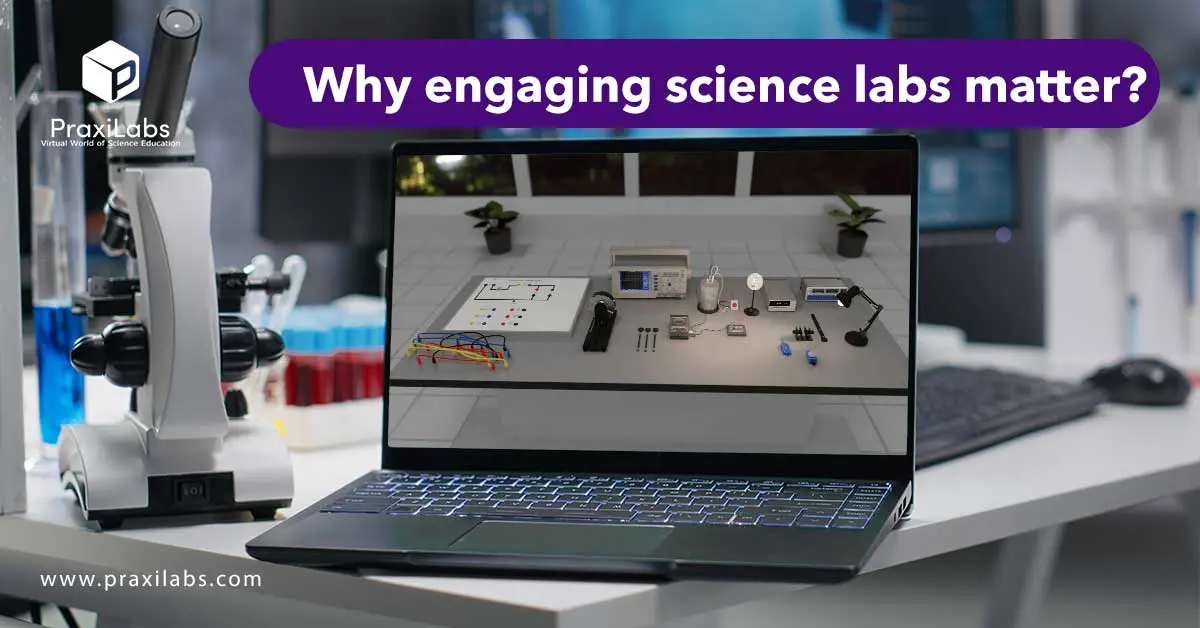
Why engaging science labs matter?
Engaging science labs are the bridge between theory and real understanding. When students actively experiment rather than passively observe, learning becomes deeper, more meaningful, and long-lasting. Here’s why they matter:
- Turn concepts into experiences: Hands-on and interactive labs help students visualize abstract ideas, making complex scientific principles easier to grasp.
- Build critical thinking skills: Students learn to observe, hypothesize, test, and analyze—core skills at the heart of STEM education.
- Increase motivation and curiosity: Science interactive lab for experiments spark excitement and encourage students to ask questions and explore further.
- Improve knowledge retention: Learning by doing helps students remember concepts better than traditional lecture-based methods.
- Prepare students for real-world science: Engaging labs mirror real scientific practices, equipping learners with practical and analytical skills needed for future careers.
- Support safe and inclusive learning: Virtual and interactive labs apps allow repeated practice in a risk-free environment, ensuring equal access for all learners.
Top features of engaging science lab
Some of top features of engaging science lab include:
Providing interactive and immersive simulations:
Allows students to conduct various interactive experiments, understand complex mechanisms, and analyze results in an environment that simulates a real laboratory.
Deeper understanding of concepts:
Helps connect theoretical knowledge with practical application through an immersive 3D interactive environment.
Inquiry-based learning:
Students design, question, and explore, rather than just following steps, building critical thinking.
Conducting advanced scientific Experiments:
Enables the performance of advanced experiments in fields such as biology, physics, and chemistry.
How can immersive virtual tech boost lab engagement?
Immersive tech like virtual reality (VR) significantly boosts lab engagement by providing interactive, realistic simulations that enhance students’ cognitive, behavioral, and emotional participation.
According to studies, researchers generally agree that immersion is a crucial element in influencing psychological factors such as a higher sense of presence, increased engagement, positive attitudes towards learning subjects, and better learning perceptions.
- Immersive VR breaks the constraints of temporal and spatial sensory perceptions, providing a more realistic environment for learning. It goes beyond the traditional visual stimuli of non-immersive VR and facilitates a higher degree of involvement.
- Furthermore, immersive VR combines tactile interfaces (such as wearable sensors) with head-mounted displays, enhancing the level of interaction and control during the learning process.
- This integration is more conducive to knowledge transfer and task-solving, as learners can actively engage with the virtual learning environment through physical actions and feedback.
- The combination of visual, auditory, and tactile stimuli in immersive VR creates a more immersive and realistic learning experience, leading to a larger effect on learning engagement.
How do engaging science labs boost learners curiosity?
Engaging science labs boost curiosity by making learning hands-on and interactive, transforming abstract theories into tangible experiences, allowing students to ask their own questions, fostering critical thinking, and providing a sense of ownership and discovery that builds confidence and a lifelong love for science.
This active exploration, troubleshooting, and real-world application demystify science, making it fun and relevant.
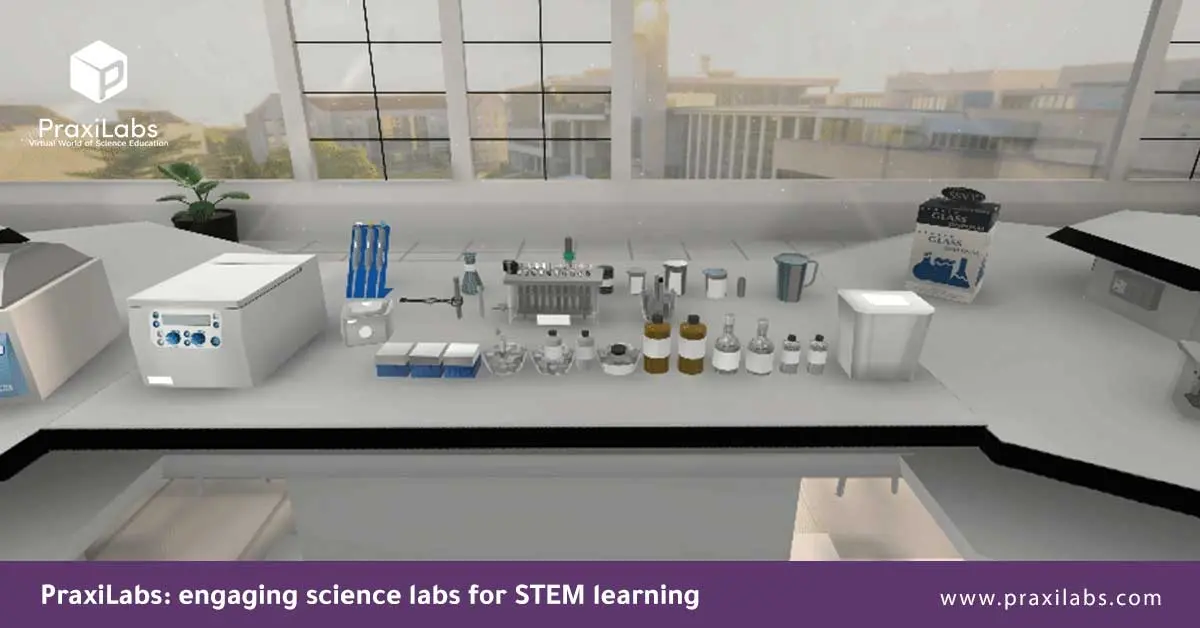
PraxiLabs: engaging science labs for STEM learning
With PraxiLabs, one of the leading simulation platforms in education, students actively learn while conducting their experiments using our educational simulations software.
Students gain a complete experience, with guidance and educational materials that assist them throughout the learning process rather than just observing experiments.
We not only provide each student with a science lab, but we also enrich their knowledge and understanding through immersive virtual experiments across a variety of subjects.
The PraxiLabs team does not simply offer schools, colleges, and institutions this fantastic solution; it partners with them to ensure those organizations are utilizing it to its fullest capabilities.
Explore the largest library of science simulations:
PraxiLabs offers one of the largest collections of science simulations available online, covering a broad spectrum of scientific disciplines.
These virtual labs are accessible anytime, anywhere, from any device with internet access — with no physical lab setup or costly equipment required.
PraxiLabs boasts over 210 virtual science experiments spanning more than 20 branches of science, making it one of the most extensive science simulation libraries for education today.
Students and teachers can explore realistic experimental procedures with interactive controls, data tracking, and realistic visuals.
Physics
- Heat and Thermodynamics Experiments.
- Mechanics.
- Properties of Matter.
- Electricity.
- Magnetism.
- Modern Physics Simulations.
- Wave Experiments.
Chemistry
- Basic Radical tests (Inorganic Chemistry).
- Organic Chemistry.
- Acidic Radical tests (Inorganic Chemistry).
- General Chemistry.
- Analytical Chemistry.
Biology
- Physiology.
- Cell Culture.
- Toxicology.
- Bioenergetics.
- Biochemistry.
- Molecular Biology.
- Immunology.
- Microbiology.
Frequently Asked Questions
What makes a science lab engaging for students?
Using interactive and dynamic learning environments that help students understand scientific concepts and conduct science experiments in an interactive way.
Where do I find experiments that involves all 3 sciences?
PraxiLabs virtual labs provide more than 210 experiments in all 3 science chemistry, physics, and chemistry.
Why is safety important in science labs?
To avoid lab accidents. Many materials and agents, hazardous substances, dangerous tools, and experimental procedures used in laboratories can cause serious injury if not handled properly.