 PraxiLabs A virtual world of science

Last Updated on January 21, 2026 by Muhamed Elmesery
Learning today looks very different from the classroom of the past. Technology has reshaped how students interact with knowledge, moving learning beyond textbooks and lectures into dynamic, immersive experiences.
Through interactive tools, simulations, and digital platforms, students can now visualize abstract concepts, experiment in risk-free environments, and learn at their own pace.
Technology not only makes learning more accessible and engaging, but it also helps students build a deeper understanding by connecting theory with real-world applications. As education continues to evolve, technology is no longer just a support tool—it has become a core driver of meaningful, effective learning.
Table of Contents
How has technology changed education?
Technology has changed the methods and quality of education over the years. Technology makes learning more effective by improving accessibility, interactivity, and engagement.
It also supports collaboration and personalized learning by identifying student needs, delivering tailored content and learning paths that match individual learning paces and styles, moving beyond a one-size-fits-all approach to instruction.
How does technology help students learn interactively?
Technology helps students learn interactively by transforming students into active participants through engaging tools like
- Gamification.
- VR/AR simulations.
- Collaborative platforms.
- Educational apps.
It also offers instant feedback, caters to diverse learning styles, and provides immersive experiences that make abstract concepts tangible and enjoyable, boosting motivation and deeper understanding as part of its role on how does edtech help students
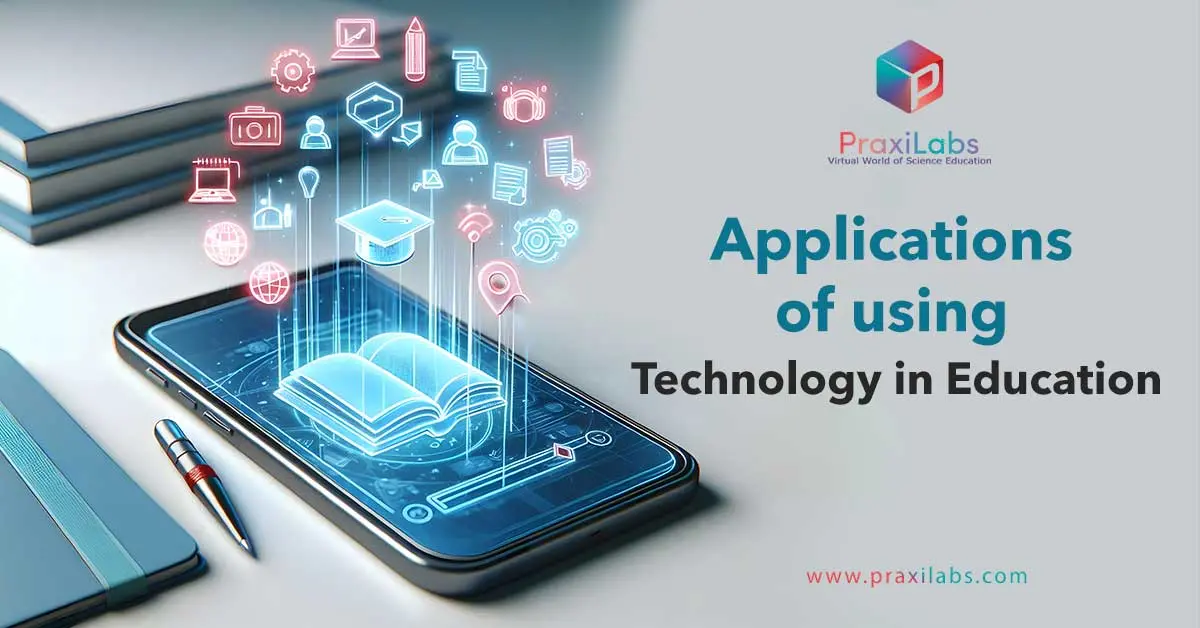
Applications of using technology in education
There are several applications of using technology in education (how does technology help education) such as:
VR/AR simulations
These simulations replicate real-world environments by creating realistic digital experiences for training, design, and entertainment.
VR/AR simulations rely on tools such as special VR glasses, virtual lab science simulations, headsets, and more!
Gamification
The use of technology in education has enhanced the development of gamification tools in education.
Gamification helps students learn concepts more easily and effectively, which allows them to become more engaged. Gamification makes learning more fun and promotes inclusiveness.
Interactive Smart Whiteboard
The smart whiteboard is an educational technology tool that allows teachers to display their computer screen or mobile device’s screen onto a whiteboard mounted on a wall or mobile cart.
This type of whiteboard enables students and teachers to interact, collaborate and even manipulate data on the touch screen using their fingers or a stylus tool.
Challenges of technology integration in education
One of the major challenges of technology integration in education is that it negatively affects direct interaction among students and educators, and it also reduces the interaction between students themselves, because communication is often not face-to-face.
How has technology made it easier to experience scientific concepts?
Technology has transformed how we experience scientific concepts by making them visual, interactive, accessible, and safe—turning abstract ideas into hands-on understanding. Here’s the impact of technology on students:
-
Visualization of abstract ideas
Many scientific concepts, such as electric fields, molecular bonding, or wave interference, are hard to imagine from textbooks alone.
Technology uses simulations, animations, and 3D models to make the invisible visible, helping learners see how systems behave in real time.
-
Interactive, hands-on learning
Instead of passively reading, learners can now:
- Adjust variables.
- Run experiments.
- Observe instant outcomes.
This interactivity mirrors real scientific inquiry and improves conceptual understanding far more than static diagrams.
Explore: Major Advantages of Virtual Education in Universities
-
Safe and risk-free experimentation
Some experiments involve hazards, expensive equipment, or delicate setups. Technology, especially virtual labs and simulations—allows students to experiment freely without safety risks, material waste, or fear of failure.
-
Learning anytime, anywhere
With online platforms and digital labs:
- Science learning is no longer limited to physical classrooms.
- Students can repeat experiments at their own pace.
- Access is possible even where resources are limited.
This flexibility supports diverse learning styles and learner abilities.
-
Immediate feedback and deeper understanding
Modern tools provide:
- Real-time data.
- Instant graphs and measurements.
- Immediate feedback on mistakes.
This helps learners quickly connect cause and effect, a key part of mastering scientific thinking.
-
Bridging theory and real-world application
Technology links equations and laws to real phenomena—showing how theory works in practice. This makes science feel relevant, practical, and engaging, not just academic.
How do virtual labs support science edtech?
According to studies, the virtual laboratories with high-quality realistic 3D integration and a high level of interactivity widely support science EdTech.
In order to construct high-level virtual laboratories for middle-school science learnings, the study propose improving the virtual laboratories from two main perspectives:
- integrating the industry-used assembly technologies into virtual laboratory experiments.
- introducing 3D gauges into virtual laboratories.
These two points can greatly enhance the realism and attractiveness of virtual laboratory experiments. As a result, experimental assignments will not only help students to better understand scientific processes and rules, but also teach them how to apply the acquired knowledge in practice.
Explore: How do Virtual Teaching Techniques Transform Science Education?
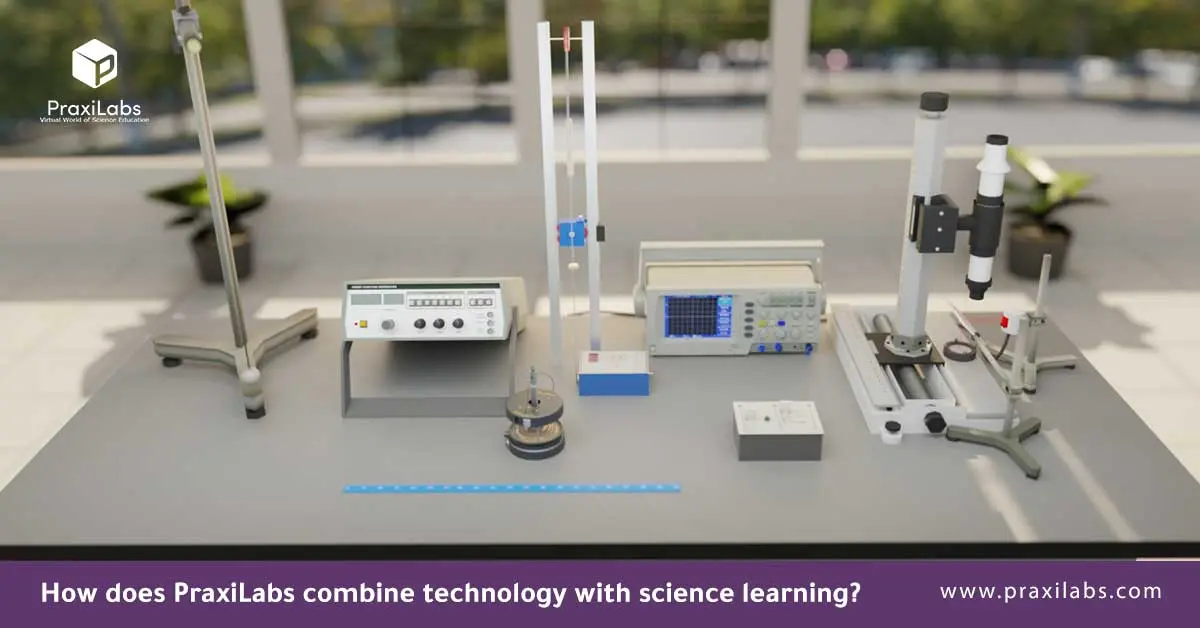
How does PraxiLabs combine technology with science learning?
PraxiLabs stands out as one of the most effective technological innovations transforming science education today. By offering fully interactive 3D virtual science labs, PraxiLabs gives students the freedom to conduct experiments anytime and anywhere—without the limitations, risks, or costs of traditional physical labs.
PraxiLabs is designed to address the challenges faced by traditional laboratories, such as high costs and the risks associated with certain experiments, while also enabling experiments to be conducted at any time.
It can be said that the platform’s primary goal is educational rather than research-oriented; it allows your students to learn protocols and perform various experiments.
To benefit from the Praxilabs platform at your university or school, all you need to do is follow these steps:
- Contact us and request a free demo, where a Praxilabs expert will get in touch with you to provide a hands-on free trial.
- Determine the number of students, pricing, and the subscription plan that best suits your institution.
- Activate the Praxilabs platform within your educational institution and create accounts for students and faculty members.
- Provide training sessions for faculty members and students on how to use the platform.
Frequently Asked Questions
What does technology integration mean in education?
Technological integration is the use of technology to deepen learning and achieve curriculum goals by using digital tools like computers, apps, and the internet.
How does technology help both teachers and students?
Technology helps teachers by streamlining admin, personalizing lessons, and boosting engagement, while it aids students through interactive content, instant resources, collaborative tools, and skill development for the future.
Are there any considerations when using ed-tech?
Yes, challenges and considerations include inadequate technical infrastructure, teachers’ limited digital competencies, limited interactions between students.