Test for Carboxylic Acid Functional Group (Lactic Acid)
Chemistry | Organic Chemistry



2.5M+
Active Users Worldwide

80%
Improved Learning Retention

60%
Reduction in Laboratory Costs
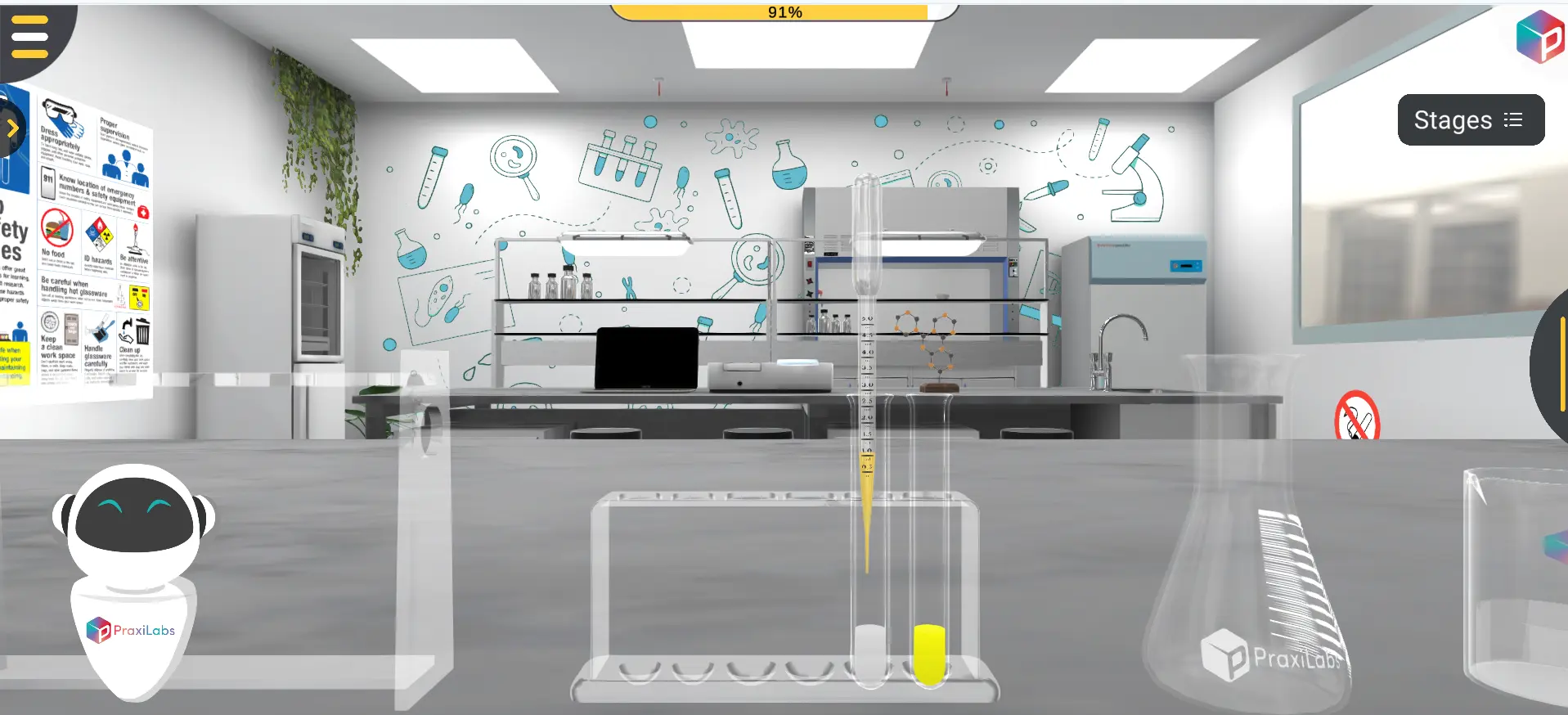
To detect the presence of carboxylic acid functional groups (-COOH) in samples using the ferric chloride (FeCl₃) and interpret the results based on observed color changes.
The ferric chloride test (functional group test for carboxylic acid) is a qualitative method for detecting carboxylic acid groups in a sample. The test involves adding neutralized ferric chloride (FeCl₃) solution dropwise to the sample. If carboxylic acids are present, a characteristic color change (typically yellow to lemon yellow) will be observed, indicating a positive result. A blank test is also prepared using distilled water for comparison, allowing differentiation between a true positive reaction and the reagent’s background color.
By the end of the test for carboxylic acid functional group, the student should be able to:


I love the idea of virtual labs. It's gonna be something that takes our R&D and work in labs to another level. And I look forward to seeing what PraxiLabs can do with it.
Michelle Anderson, Head of Innovation
IE University - Spain
Although there are now several vendors offering virtual reality software for physics labs, there is only one that offers a realistic, I feel like I’m in a real lab solution: PraxiLabs.
Dr. William H. Miner, Jr., Professor of Physics
Palm Beach State College, Boca Raton, FL
PraxiLabs offered my students a chance to actively engage with the material. Instead of watching videos on a topic, they could virtually complete labs and realize the practical applications of class topics. This is a quality alternative to in-person labs.
Crys Wright, Teaching Assistant
Texas A&M University, USA
With the onset of the COVID-19 pandemic, we found ourselves in a situation that forced us to act quickly to find the best solution available to provide our students with a quality molecular genetics laboratory experience.
Korri Thorlacius, B.Sc., Biology Lab. Instructor
Biology Department - Kwantlen Polytechnic University