 PraxiLabs A virtual world of science

Last Updated on April 8, 2026 by Muhamed Elmesery
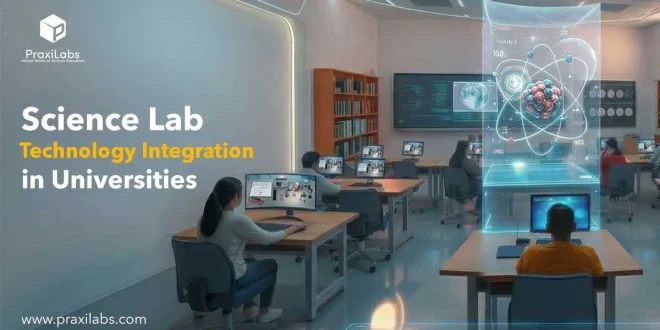
In today’s rapidly evolving academic landscape, universities are reimagining the traditional laboratory by integrating advanced science lab technology into their learning ecosystems.
From virtual simulations and AI-driven tools to smart lab systems and cloud-based platforms, this shift is transforming how students engage with science—making experiments more accessible, interactive, and data-driven.
Beyond enhancing learning outcomes, this integration empowers institutions to scale efficiently, foster innovation, and equip students with the practical, future-ready skills demanded by modern industries.
Table of Contents
How tech advances are changing lab environments?
Technological advances are transforming laboratory environments into faster, safer, and smarter spaces. We now have virtual science labs that simulate real-world lab environments digitally by using computers.
These virtual labs help students perform their experiments, observe, analyze, and learn anywhere, anytime, and multiple times in a completely safe environment.
Benefits of science lab technology in universities:
Science lab technology in universities have brought about a vital transformation in the way education is delivered and received.
Learning is no longer confined to traditional classrooms; it has become a flexible, continuous, interactive digital experience.
Here are the main benefits of science laboratory technologies in universities:
Enhanced Conceptual Understanding
Traditional lectures often struggle to explain abstract scientific concepts. With advanced lab technologies—like virtual labs and interactive simulations—students can visualize complex processes in real time.
- Physics students can observe motion, waves, or electricity dynamically.
- Chemistry students can simulate reactions safely.
- Biology students can explore cellular processes in 3D.
This hands-on digital interaction significantly improves comprehension and long-term retention.
Enabling learning anytime and anywhere
Thanks to digital platforms and distance learning, students can access educational content online without geographical or time restrictions, reinforcing the principle of continuous learning.
Interactive learning instead of rote memorization:
The use of interactive videos, digital simulations, virtual labs, and augmented reality has turned the student from a passive recipient into an active participant in the learning process.
Personalizing the learning experience:
Artificial intelligence and data analysis have contributed to designing customized learning paths that match the level of each student, improving comprehension efficiency and absorption speed..
Cost Efficiency for Institutions
Maintaining physical labs is expensive. Universities must invest in equipment, chemicals, consumables, maintenance, and safety measures.
Science lab technology significantly reduces these costs by:
- Minimizing material usage.
- Extending the lifespan of physical resources.
- Reducing the need for constant upgrades.
Explore: Unmasking the Power of Simulation Laboratory into STEM Learning
Key technologies in modern science labs:
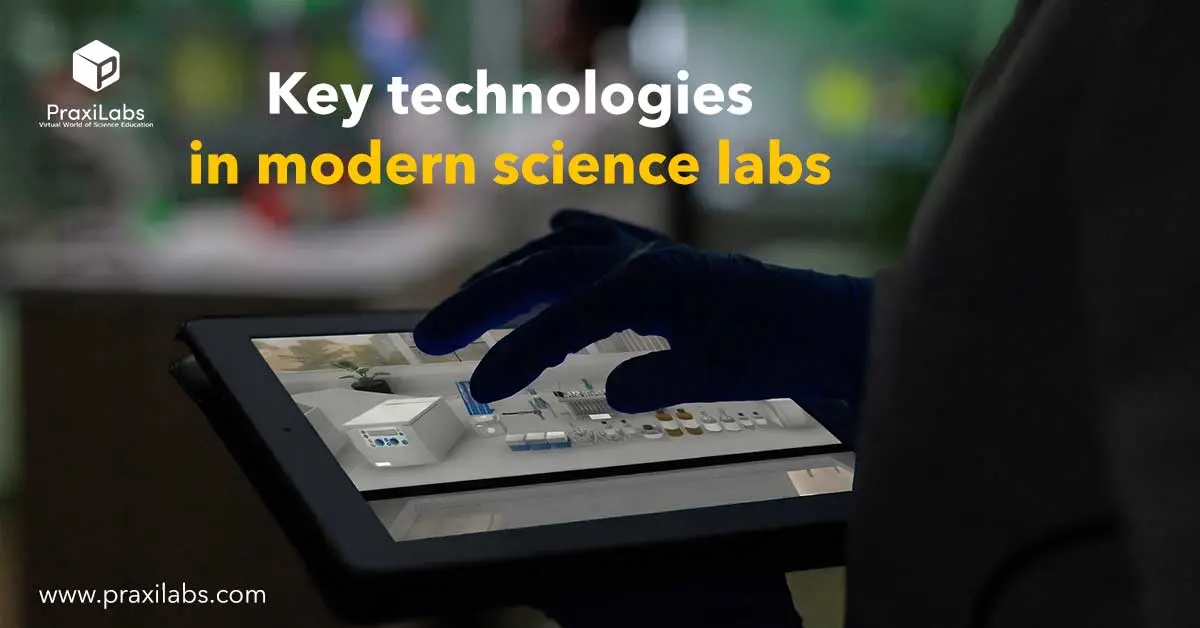
Modern science laboratory technology in universities are no longer limited to microscopes and glassware—they’re powered by advanced technologies that enhance experimentation, improve accuracy, and prepare students for cutting-edge research environments.
Here are the key technologies shaping modern science labs:
-
Virtual Labs and Simulation Platforms
Virtual lab platforms (like PraxiLabs) allow students to perform experiments in a fully digital environment.
- Simulating complex or hazardous experiments safely.
- Repeating experiments without limitations.
- Visualizing abstract concepts in 3D.
These tools are especially valuable in physics, chemistry, and biology education, making labs more accessible and scalable.
-
Artificial Intelligence (AI) and Machine Learning
AI is revolutionizing how labs operate and how data is analyzed.
- Automating data analysis and pattern recognition.
- Predicting experiment outcomes.
- Assisting in drug discovery and material science.
AI helps students and researchers make faster, data-driven decisions.
-
Internet of Things (IoT) in Labs
IoT connects lab devices and instruments to a central system.
- Real-time monitoring of experiments.
- Remote control of equipment.
- Automated data collection.
This creates smart labs where everything is interconnected and efficient.
-
Augmented Reality (AR) and Virtual Reality (VR)
AR and VR technologies bring immersive learning into science labs.
- AR overlays digital information onto real-world experiments.
- VR creates fully immersive lab environments.
Students can interact with molecules, organs, or physical systems in ways that were previously impossible.
-
Advanced Lab Equipment and Automation
Modern labs use automated instruments to improve precision and efficiency.
- Robotic pipetting systems.
- Automated microscopes.
- High-throughput screening machines.
Automation reduces human error and allows researchers to handle complex experiments at scale.
Enhancing experimental work through technology:
Technology transforms experimental work by making it more precise, accessible, and efficient. Through virtual labs, simulations, and advanced data analysis tools, students and researchers can conduct experiments in controlled, risk-free environments while achieving highly accurate results.
It also enables real-time data collection, automated measurements, and instant feedback, reducing human error and saving time. Additionally, technology expands access to complex experiments that may be costly or unsafe in traditional labs, allowing learners to explore, repeat, and master scientific concepts with greater confidence and flexibility.
Role of artificial intelligence academic laboratories:
Several studies illustrate that AI integration provides substantial advantages across multiple domains.
The results derive from an analysis of 45 assessed publications (n = 45), permitting multiple benefits to be recorded per study where applicable.
Among the 45 studies:
- Emphasised the role of artificial intelligence in accelerating research (91.1%) 41.
- Highlighted its contribution to fostering creative business models (82.2%) 37.
- In 86.7% of examinations (39 studies), data administration and analysis were identified as significant advantages, thereby improving data utilization and interpretation.
- Among the 36 investigations, nearly 80% observed enhancements in process automation and operational efficiency.
- Over 75% (34 studies) emphasized the potential application of artificial intelligence in predictive analytics and maintenance to optimize resources and reduce operational costs.
- Recognised operational scalability and flexibility as essential for ensuring (34 studies) 75.6% interoperability and responsiveness to emerging laboratory challenges.
- Ethical AI implementation and human-AI cooperation were highlighted in 66.7% (30 studies) and 53.3% (24 studies) of the papers, respectively.
Ultimately, 55.6% (25 studies) demonstrated enhanced diagnostic accuracy, whereas 33.3% (15 studies) indicated advancements in personalized medicine.
Explore: Beyond Reality: Engaging 3D Science Experiments with Simulators
Investing in virtual lab systems:
Investing in virtual lab systems is a strategic move for universities aiming to modernize education while optimizing costs and outcomes. Here’s why it matters:
- Cost Efficiency: Reduces spending on physical equipment, consumables, and maintenance while scaling access to more students.
- Accessibility: Enables students to perform experiments anytime, anywhere—ideal for hybrid and online learning models.
- Safety: Eliminates risks related to toxic substances and hazards.
- Scalability: Allows institutions to accommodate large student numbers without expanding physical lab space.
- Enhanced Learning Outcomes: Interactive simulations improve understanding, engagement, and retention.
- Future-Ready Skills: Prepares students for digital, tech-driven work environments.
Virtual labs aren’t just a cost-saving tool—they’re a long-term investment in quality education, flexibility, and institutional competitiveness.
Discover our individual learners and institutions plans
How did PraxiLabs support science lab technology?
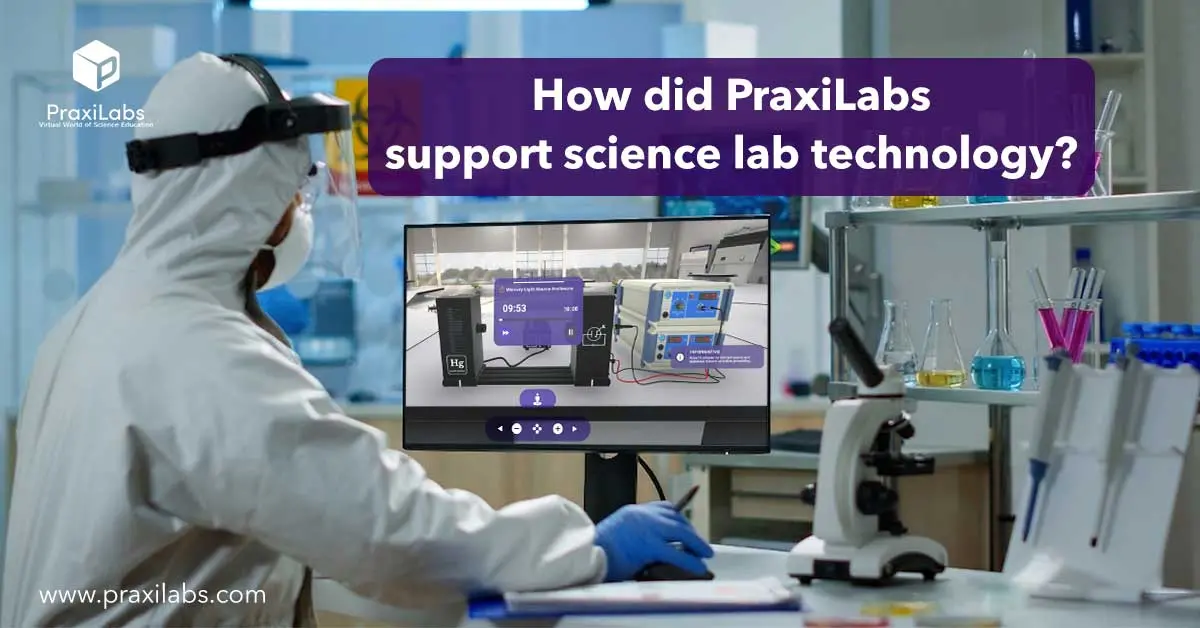
PraxiLabs is considered one of the leading companies regionally and globally in the field of digital education, especially in scientific disciplines.
PraxiLabs offers an innovative solution through 3D virtual laboratories, where it:
- Provides interactive scientific experiments that accurately simulate real laboratories.
- Eliminates the need for expensive equipment or hazardous materials.
- Enables students to repeat the experiments multiple times without additional cost.
- Enabled learning anytime and anywhere without the need for physical labs.
- Provides accurate performance reports and analyses to track student progress.
- Integration easily with Learning Management Systems (LMS) within educational institutions.
- Supports the educational process with explanations, evaluations, and immediate feedback.
Thus, PraxiLabs succeeds in combining the power of science lab technology with the depth of virtual education in one integrated experience.
Frequently Asked Questions
How do you integrate science and technology?
By embedding digital tools like simulations, virtual labs, and data analysis software into science education, enabling students to explore concepts interactively, run experiments remotely, and analyze real-time results with greater accuracy.
What is the benefit of using virtualization in the lab?
Virtualization allows students to perform experiments anytime, reduces costs of physical materials, ensures scalability, and provides a safe environment to practice complex or hazardous experiments without risk.
How does technology improve laboratory safety?
Technology enhances safety through virtual simulations that eliminate exposure to hazards, automated systems that reduce human error, and digital monitoring tools that ensure proper handling of equipment and materials.