 PraxiLabs A virtual world of science


Last Updated on May 3, 2026 by Muhamed Elmesery
As lab environments grow more complex, ensuring student safety requires more than traditional instructions. Virtual labs, such as PraxiLabs, are emerging as powerful interactive solutions that allow students to practice experiments, understand safety protocols, and experience potential risks—all within a completely safe, controlled digital environment.
By combining hands-on learning with zero real-world hazards, virtual labs are redefining how institutions approach lab safety interactive training.
Table of Contents
What is science lab safety?
Science lab safety interactive simulation is a virtual lab environment that helps students to understand safety roles through a set of procedures, guidelines, and precautions designed to prevent accidents, injuries, or hazardous exposure when working with chemical, biological, or physical materials. Virtual lab environments help students understand safety roles through interactive simulations that replicate real-world scenarios.
Why lab safety interactive methods are major concern?
Ensuring lab safety isn’t just about rules—it’s about how effectively those rules are understood, practiced, and applied.
That’s why interactive safety methods have become a major concern for educational institutions aiming to minimize risks and improve student preparedness.
- High-risk environments demand more than passive learning
Traditional safety lectures often fail to prepare students for real lab hazards like chemical spills, fires, or toxic exposure. - Human error is a leading cause of lab accidents
Interactive methods reduce mistakes by allowing learners to practice procedures repeatedly in a controlled setting. - Safe exposure to dangerous situations
Platforms like PraxiLabs simulate emergencies (explosions, contamination, equipment failure) without real consequences. - Improving engagement and retention
Interactive learning (simulations, gamification) is proven to increase focus and long-term memory compared to static instructions. - Ensuring compliance with safety standards
Institutions must meet strict regulations; interactive training helps ensure students actually understand protocols, not just memorize them. - Reducing costs of accidents and damages
Better-trained students mean fewer incidents, saving institutions from expensive equipment damage and liability issues. - Building confidence before entering real labs
Students who train interactively feel more prepared and less anxious when dealing with real equipment and hazardous materials. - Adapting to modern digital learning trends
Today’s learners expect immersive, tech-driven experiences rather than traditional, lecture-based safety training. - Scalability and accessibility
Interactive safety training can reach large numbers of students anytime, anywhere, without the constraints of physical lab capacity.
Explore: Science Lab Technology Integration in Universities
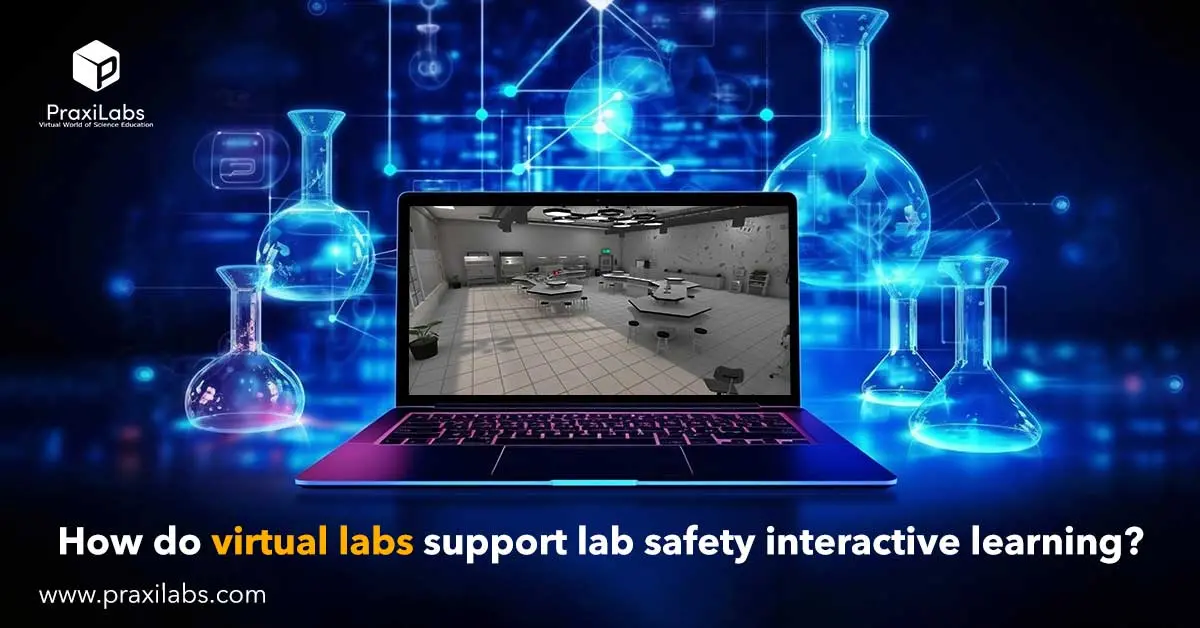
How do virtual labs support lab safety interactive learning?
The integration of virtual labs into science education brings about a paradigm shift in the way students engage with course material. Virtual labs excel in providing interactive learning experiences that extend beyond the capabilities of traditional classrooms.
Examining case studies and success stories is instrumental in understanding the real-world impact and effectiveness of virtual lab implementation in science education.
One case study involves the integration of virtual labs in high school physics. The implementation resulted in a significant increase in student engagement, with a reported 25% improvement in test scores compared to traditional methods.
The virtual labs, which simulated complex physics experiments, allowed students to explore concepts such as motion, energy, and gravity in an interactive and visually immersive manner.
The success of this implementation lies not only in the enhanced understanding demonstrated by students but also in the positive shift in their attitudes toward science.
Role of virtual simulations in preventing lab accidents:
Virtual simulations play a critical role in preventing lab accidents by allowing students to practice experiments in a completely risk-free environment before entering a physical lab.
Through platforms like PraxiLabs, learners can interact with hazardous materials, understand proper safety protocols, and witness the consequences of mistakes—without real danger.
This hands-on virtual training reduces human error, reinforces correct procedures, and builds confidence. As a result, students are better prepared, more aware of risks, and far less likely to cause accidents in real laboratory settings.
Simulating high-risk experiments in a safe environment:
Simulating high-risk experiments in a lab safety interactive environment has become one of the most transformative advances in modern science education. Instead of exposing students to dangerous chemicals, volatile reactions, or costly equipment, virtual labs provide a controlled, risk-free space where learning thrives without compromise.
Platforms like PraxiLabs enable students to engage with realistic, interactive simulations of high-risk experiments. Whether it’s handling corrosive acids, studying combustion reactions, or exploring radioactive materials, students can repeat procedures, make mistakes, and learn from them—without any real-world consequences.
For Example:
PraxiLabs provides a Safety laboratory simulation (Ammonium molybdate test for arsenate) to help students:
- Learn all safety instructions and precautions regarding working in a chemical lab.
- Understand safety signs
- Review Material Safety Data Sheets( MSDS).
- Determine whether a given powder is arsenate or not.
The lab safety virtual lab involves 3 stages:
1- Before entering the lab
Before entering the lab: In the transition corridor or in a preparation room, students will find an instruction board on the wall containing several important instructions (ex: You must wear your lab coat, goggles, and gloves before entering the lab).
2- Beside the lab door
At the door, students will stand and see the prohibitory signs. Click on the sign will trigger a popup showing similar prohibitory signs.
3- Inside the Lab – Exploring the tools
After entering the lab, a warning pop-up appears introducing the different safety equipment present in the lab. The view moves across the lab to show the location of each piece of safety equipment.
Start exploring PraxiLabs Safety Lab today and give your students a smarter, safer way to learn—risk-free and fully interactive.
Why every institution should adopt lab safety interactive solutions?
Students develop attitudes towards safety and acquire habits of assessing hazards and risks at a young age. Students come from diverse backgrounds and have various levels of preparation. Most of them have no previous hands-on training in handling chemicals or equipment, while others may come well prepared to assume personal responsibility for risk assessment and safety planning in their experiments.
The school science laboratory provides an opportunity to instill positive attitudes and habits by allowing students to observe and select appropriate practices and perform laboratory operations safely. Safety and health lay the foundation for acquiring these skills.
Students should think through the implications and risks of experiments they observe or conduct to understand that safe procedures are an integral part of the way science practice. Using lab safety interactive solutions (unlike traditional lectures or reading manuals) allows learners to experience the consequences of accidents in a safe, virtual environment.
Explore: Lab Safety Simulation at PraxiLabs

PraxiLabs: Virtual labs that perfectly match your syllabus
PraxiLabs offers fully interactive virtual labs designed to align seamlessly with your academic curriculum. Each simulation is carefully mapped to standard syllabi, ensuring students can perform experiments that directly support their coursework—without the limitations of traditional labs.
Why PraxiLabs is a Perfect Curriculum Fit:
- Curriculum-Aligned Simulations
Each experiment is designed to match real academic standards, helping educators deliver lessons without needing to redesign their course structure.
- Wide Coverage of STEM Subjects
With 210+ simulations across multiple science disciplines, educators can easily find experiments that align with specific topics and learning outcomes.
- Customizable Experiments
Didn’t find what you need? PraxiLabs can tailor simulations to fit your exact curriculum requirements—even in different languages.
- Integrated Assessments & Analytics
Link experiments with quizzes, track student progress, and ensure learning objectives are met—all within one platform.
- Flexible Learning, Anytime
Students can access experiments anytime, repeat them as needed, and learn at their own pace—without being limited by lab schedules
Frequently Asked Questions
What is an interactive lab?
An interactive lab is a digital or physical learning environment where students actively perform experiments, manipulate variables, and observe results in real time, making learning more engaging and hands-on.
Can virtual labs reduce experiment accidents?
Yes, virtual labs significantly reduce experiment accidents by allowing students to practice procedures in a safe, risk-free environment without exposure to hazardous materials or equipment.