 PraxiLabs A virtual world of science

Last Updated on March 28, 2026 by Muhamed Elmesery
In today’s fast-paced world, the methods of learning and skill acquisition are constantly evolving. Traditional classroom-based training has its merits, but as the digital landscape continues to expand, virtual training labs are emerging as a powerful tool for education and professional development.
In this blog post, we’ll explore the concept of virtual training labs, their benefits, their potential to revolutionize the way we learn, and more.
Table of Contents
Empower Your Learning Journey: What Are Virtual Training Labs?
Virtual training labs are virtual environments that were designed to mimic real-world software applications for training and education purposes. These platforms enable learners in many fields to gain practical skills and hands-on experience in a virtual setting, without the need for physical resources or tools. This virtual learning approach offers an immersive and interactive learning experience for learners, also it can be accessed easily anytime and anywhere.

Empower Your Learning Journey | What Are Virtual Training Labs Benefits?
Interactive environment: Virtual training labs provide interactive, immersive and direct connection with the training environment by providing simulations for hands-on learning experience.
Scalability: For organizations that need to train a large number of students or employees at the same time, virtual training labs are a good choice as they can accommodate a large number of users simultaneously, making them highly scalable.
Enhanced knowledge retention: Virtual labs provide interactive and scenario-based learning that enhance learner retention and engagement. They are easily accessible by a large number of students.
Mobility: Training virtual labs work with any device connected to the Internet. Whether users are using a desktop PC, laptop, smartphone or tablet, virtual labs are compatible with all common devices and operating systems, with minimum memory requirements and browser capabilities.
Eco-Friendly: By reducing the need for physical resources and travel, virtual training labs contribute to a more sustainable way for learning. This eco-friendly approach aligns with the growing emphasis on environmental responsibility and can be a compelling factor for organizations seeking to reduce their carbon footprint.
Cost Effective & Affordable: Virtual labs help reduce much of the cost that goes towards maintaining a traditional lab, from resources and supplies to general maintenance and equipment. A virtual lab provides users with access to an interactive 3D science experiments at a fraction of the cost.
Available Anytime, Anywhere and for Many Times
Training virtual labs provide a virtual learning and teaching environment that aims to develop the users’ practical skills and enhance knowledge retention. And as they are available through the Internet, users can do what they need without being restricted to specific places or specific times as it is in the case of using real labs. Learners can use the virtual labs with 24/7 unlimited accessibility.
Data Analytics and Tracking: Virtual training labs can track learner progress to show current status, what they are doing and more multimedia information about steps, learning and areas needing improvement.
Enhanced Safety
Using a virtual training lab Protects learners from any dangers they may face during their training in real labs. It is an effective method for preventing the laboratory accidents by eliminating the dealing with any hazards. So, virtual labs provide a safe environment for learners and ensure their safety.
On PraxiLabs you can find different virtual labs simulations accessible anytime and anywhere.
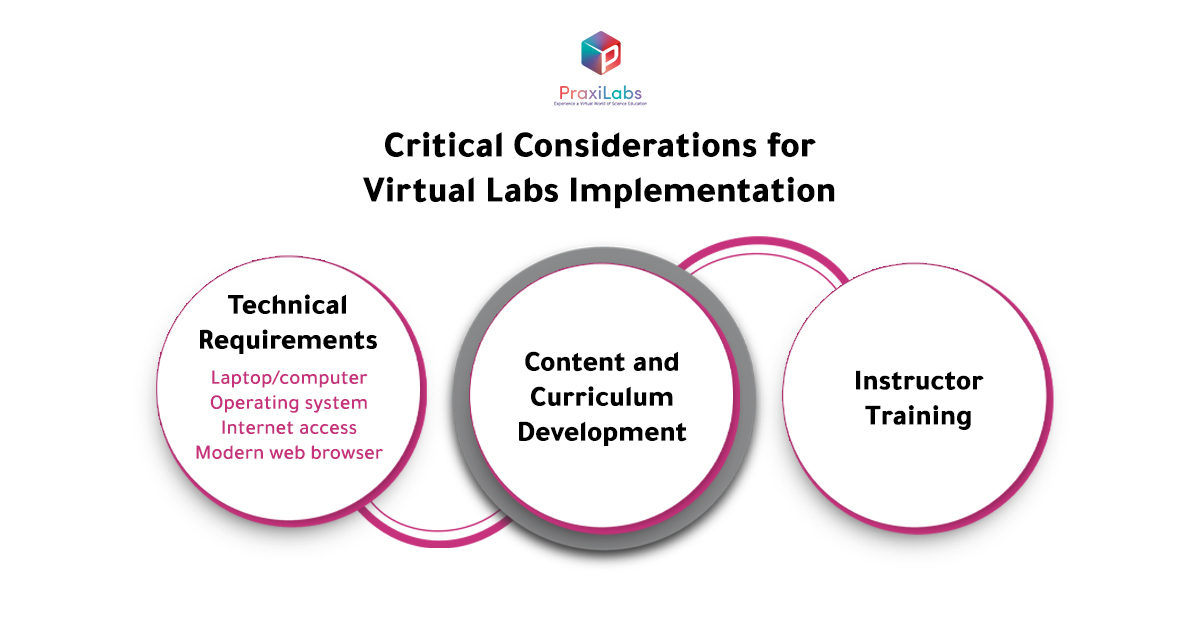
Critical Considerations for Virtual Labs Implementation:
While VTLs offer several features and benefits, there are some key factors to consider when using them:
- Technical Requirements: VTLs require a reliable laptop/computer, operating system, internet access, and modern web browser.
- Content and Curriculum Development: Effective VTLs need well-developed training content and curriculum that aligns with learning objectives.
- Instructor Training: While VTLs offer self-paced learning, instructors still play a vital role in facilitating learning and providing guidance for learners. Instructors should be well trained to effectively use and manage VTL features.
Who Uses Virtual Training Labs?
Virtual training labs are used in a wide range of industries and training fields:
- IT professionals: VTLs are ideal for training network administrators, cybersecurity specialists, and software developers. Learners can practice network configurations, security protocols, and software application functionalities in a safe environment.
- Business Professionals: VTLs can be used to train personnel on new enterprise software like customer relationship management (CRM) systems, enterprise resource planning (ERP) systems, or project management software. This allows employees to gain practical experience before using the software in a live environment.
- Educational Institutions: VTLs can be a valuable tool in technical education programs, allowing students to practice skills learned in the classroom on real-world software and hardware applications.
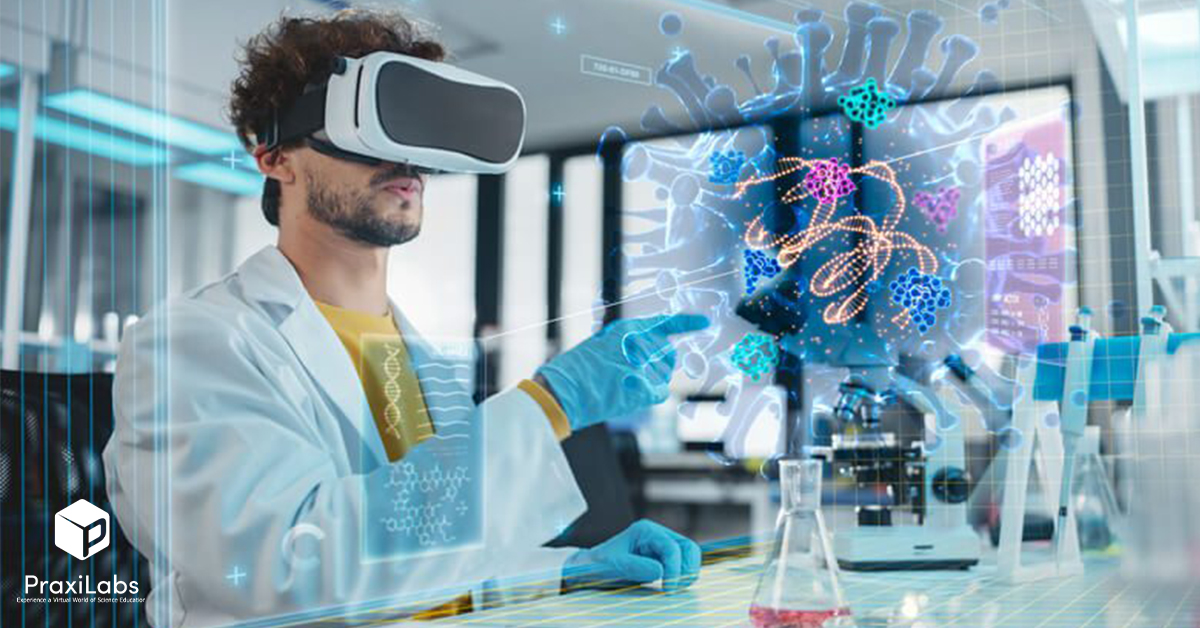
Exploring Virtual Training Labs and the Future of Learning:
Virtual training labs are revolutionizing the way we learn and train. As technology continues to advance, we can expect to see even more sophisticated VTLs with features such as:
Artificial intelligence (AI) Integration
By integrating AI into the virtual lab environment, this offers several benefits to learners:
- The integration of AI and VR in virtual training labs enhances the accessibility of learning by eliminating geographical and resource constraints.
- Users can access the virtual lab from anywhere and at any time, enabling them to learn at their own pace.
- It provides personalized feedback and guidance to users, helping them understand better and improve their learning outcomes.
- The AI algorithms analyze users’ performance, identify areas of improvement, and offer tailored recommendations for further learning.
Virtual reality (VR) and augmented reality (AR) integration
Augmented reality is a technology that allows a combination of virtual and real objects. It allows the overlaying between information and virtual objects in our real-world scenes.
It depends on using the existing environment and adding information to it to make a new artificial environment. It enables users to perceive the real world around them and incorporate virtual objects that suit the purpose for which it’s being used, in contrast to virtual reality technology, which only allows users to interact with virtual reality.
The integration of AR and VR technologies as one of the most innovative teaching methods, has opened up new possibilities for immersive and interactive learning experiences. They allow learners to explore and understand more in virtual environments that closely resemble the real world. The integration creates immersive and interactive training environments for a more realistic learning experience.
Gamification
Using gamified learning elements in training can motivate and encourage learners to participate in the learning process and thus improve their learning outcomes and also enhance their engagement and motivation in VTLs.
Exploring the Benefits of Virtual Labs
Anywhere, Anytime
Today’s technology allows students to take education anywhere. Virtual labs can be accessed on any device connected to the internet. Students can practice and learn wherever they wish. With this constant availability, students can better plan their day and benefit from every moment.
Reduce costs
Acquiring multiple lab devices so students can train in a physical space is expensive. In addition to the cost of maintaining these devices continuously, virtual laboratory platforms require significantly lower expenses.
Enhancing students’ confidence
Working with hazardous materials or handling heavy laboratory equipment can be intimidating. Providing students the chance to practice in a virtual, interactive lab environment before being exposed to real-life work conditions is important and enhances their confidence.
Safety
Virtual Labs enable learners to try all kinds of experiments without the risk of damaging equipment or injuring themselves. They can also test, compare, and determine which scenario is the most effective without having to try them out in real life.
Accessibility
Virtual labs can be accessed on any device connected to the internet. Whether you are using a desktop PC, laptop, smartphone, or tablet, most virtual labs are compatible with all common devices and operating systems, requiring minimal memory and browser capabilities.
Authenticity
Virtual labs aim to replicate the real lab experience as closely as possible but may have limitations in accurately capturing certain aspects of the physical laboratory environment.
Integration with Curriculum
Virtual labs can be integrated into curricula to enhance learning outcomes by providing additional resources, supplementary experiments, or opportunities for pre- and post-lab activities.
Engaging learners
Lectures and presentations can be uninspiring when covering practical aspects, such as chemical experiments. However, you can capture learners’ attention by giving them the opportunity to test those procedures in a virtual chemistry lab. A dry, theoretical lesson can become engaging through practical and realistic simulations of real-world scenarios.
Interactive and Immersive Learning Experiences:
Virtual labs also provide opportunities for interactive and immersive learning experiences. Through simulations, students can manipulate variables, observe results in real-time, and gain a deeper understanding. Virtual labs often offer visualizations, animations, and interactive models that enhance learning outcomes.
Data Collection and Analysis
Virtual labs Include built-in data collection and analysis tools that provide automated and highly accurate measurement and analysis of experimental data.
Transform Science Education with PraxiLabs! Engage your Students with Virtual Experiments in Physics, Chemistry, and Biology.
How Do Virtual Labs Enhance Skill Acquisition?
Virtual labs enable learners and students in several fields to gain practical skills and hands-on experience in a virtual setting, without the need for physical resources or tools.
According to a study about the role of virtual training labs in skill development and scientific attitude, the results showed that virtual laboratories enhance students’ problem solving, critical thinking, creativity, conceptual understanding, science process skills, lab skills, motivation, interest, perception, and learning outcomes. Therefore, educators should use virtual laboratories to improve teaching quality and student learning outcomes.
What are the advantages of virtual training labs?
- 3D Immersive Interaction simulations.
- Anytime, Anywhere Access.
- Personalized & Adaptive to Learning Styles.
- Game-Like Simulations for Students.
- Real-World Lab Experience.
- Adaptive to Learning Styles.
- Practice-Centric Simulations.
- User-Friendly Experience.
- Instant Guidance & Feedback.
- Enhanced safety.
- Affordable and cost effective.
- Hands-on Experience.
Explore: Why Educational Simulations are Essential in Modern Education?
What is the most challenging part of virtual learning?
Virtual learning by using virtual labs requires professional programmers with strong skills in different programming languages. It also requires a team of experts in the scientific content, teachers, and psychology specialists.
Virtual labs require computer devices with high specifications to simulate scientific phenomena with full details and create a three-dimensional virtual lab.
Learners and students can benefit from a full sensory experience in a real lab, such as weird noises and smell, random error, or faulty machinery.
Discover the Future of Science Learning with PraxiLabs:
With PraxiLabs students get a full experience, with guidance and learning materials to further aid the learning process rather than simply following through and covering it.
With PraxiLabs students can actively learn besides performing their experiments.
- 65% of learners are VISUAL. PraxiLabs provides various multimedia forms.
- 30% are AUDITORY. PraxiLabs uses VO guidance.
- 5% are KINAESTHETIC. PraxiLabs provides more virtual “hands-on” experience.
Explore: Experience Virtual Simulations to Test Real Science Experiments
Getting Started with PraxiLabs Virtual Labs
PraxiLabs provides a complete solution, which does not aim to simply provide a basic “tool” that educational institutions can use, but rather offers an interactive and enriching learning experience by providing students with materials, guidance, experience and engaging approaches, which further enhance the learning process, makes it more engaging and eliminates concerns such as costs and hazards, as well as other constraints usually found in traditional labs.
All you need to start our virtual lab simulations is:
- Create Free Account.
- No hardware setup. No credit card required. Get started in seconds.
- Choose from 150+ Simulations.
- Select three FREE Simulations and get started.
- Practice as Many Times as You Want.
Your lab partner will help you out, along with walkthrough videos, tutorials, & more
Frequently Asked Questions
What are the benefits of using virtual training labs?
Virtual training labs provide an interactive and immersive learning environment that supports hands-on practice through simulations. They are scalable, accessible from any device, and available anytime, allowing many learners to train simultaneously.
What are the essential elements of an engaging training labs?
When using virtual training labs, several elements should be considered, including technical requirements like a reliable device and internet connection, well-designed content aligned with learning objectives, and proper instructor training to effectively guide learners and manage the virtual learning environment.
Is virtual lab effective for scientific research?
Yes! According to several studies, virtual labs can be effective in a graduate‐level course to enhance content understanding and the students’ learning retention and outcomes. Also, they are highly effective for scientific research and education, often proving as effective as or superior to traditional labs in enhancing, preparing for, and complementing hands-on experiences.
Which platform is the best for online science training?
PraxiLabs is one of the best platforms for online science training. It offers a wide range of STEM experiments in several fields through its immersive 3D virtual labs, enabling students to explore core scientific disciplines through hands-on interactive experiments.
The platform includes over 210 science simulations across more than 20 scientific disciplines, making it a comprehensive resource for STEM education.