 PraxiLabs A virtual world of science

Last Updated on April 16, 2026 by Muhamed Elmesery
Engaging scientific method simulation labs are transforming how science is learned by turning abstract concepts into interactive experiences. Instead of passively following steps, students actively explore questions, test hypotheses, and analyze results in dynamic virtual environments.
These labs make the scientific method more accessible, immersive, and relevant—helping learners connect theory to real-world applications while building critical thinking and problem-solving skills.
Table of Contents
What is the scientific method simulation?
A scientific method simulation is an interactive and immersive 3D virtual lab or computer-based virtual simulations that allows users to perform experiments and apply scientific methods in a safe and virtual environment anytime and anywhere.
Scientific method interactive simulation facilitates the entire experimental cycle—from forming questions and manipulating variables to analyzing data—without the logistical, financial, or safety constraints of a physical laboratory.
How do simulation labs support the scientific method?
Conducting scientific experiments remotely has increasingly become possible thanks to modern educational technologies such as virtual labs and simulation platforms, which allow university students to perform and analyze scientific experiments while supporting the scientific method from anywhere while benefiting from valuable scientific insights.
Virtual scientific method lab simulation for science experiments offer several advantages that make them highly valuable in modern education for supporting the scientific method:
- Safe experimentation: Students can conduct complex or hazardous scientific experiments without any risk.
- Cost efficiency: Relying on virtual labs spares institutions the high costs of laboratory equipment, maintenance, and consumable materials.
- Accessibility: Students can access experiments anytime and from anywhere.
- Visualization of complex concepts: Simulations help students see microscopic or abstract processes that are difficult to observe in real laboratories.
For example, platforms like PraxiLabs allow students to perform interactive experiments in physics, chemistry, and biology with step-by-step instructions and immediate feedback.
According to a study conducted to investigate the impact of using virtual laboratories (scientific method online lab) in simulating physics experiments to enhance students’ motivation and problem-solving skills in learning physics, the results showed that the average motivation score in the experimental class was in the high category, while in the control class it was in the low category.
The problem-solving skill scores for the experimental class were in the high category, whereas for the control class they were in the medium category.
Moreover, based on an independent samples test, it was found that there is a significant difference in motivation and problem-solving skills, which is reinforced by the positive responses of students using physics simulations in learning.
It can be concluded that physics simulations in learning physics can enhance students’ motivation and problem-solving skills.
Explore PraxiLabs science simulations catalog
Connecting scientific topics to real-world applications:
Scientific method simulations act as a bridge between theory and real-world applications by turning abstract concepts into interactive, practical experiences:
- Contextual Learning: Simulations place scientific concepts within real-life scenarios (e.g., testing water quality or drug reactions), helping learners understand why the science matters.
- Safe Experimentation: Users can explore real-world problems—like environmental changes or medical trials—without risk or cost.
- Cause-and-Effect Understanding: By manipulating variables, learners see how scientific principles directly impact real outcomes.
- Skill Transfer: The process of hypothesis, testing and analysis mirrors real industries (healthcare, engineering, sustainability).
- Decision-Making Practice: Simulations train users to apply scientific thinking to solve real-world challenges.
The future of scientific method simulation labs:
The future of scientific method simulation labs is not just about digitizing experiments—it’s about redefining how science itself is practiced, learned, and scaled.
Transforming Static Simulations to Intelligent Scientific Environments
Early virtual labs were simple, step-by-step simulations. Today—and even more in the future—they are becoming AI-powered research environments.
- AI can suggest hypotheses, design experiments, and predict outcomes.
- Systems can analyze massive datasets in real time.
- Students and researchers get adaptive guidance during experiments.
This transforms simulations into active scientific partners, not just tools.
Full Immersion with VR, AR, and Spatial Computing
The future online scientific method lab is immersive.
- VR enables fully interactive 3D lab environments.
- AR overlays guidance on real or simulated experiments.
- Haptic feedback will simulate touch and resistance.
These technologies allow users to:
- Practice complex procedures safely.
- Visualize invisible phenomena (molecules, fields, reactions).
- Engage deeply with the scientific method through experience.
High-fidelity 3D and XR simulations are already becoming standard in modern virtual labs.
Personalized Scientific Learning Paths
Scientific method online simulation will adapt to each learner:
- Difficulty adjusts based on performance.
- Real-time feedback improves scientific reasoning.
- Built-in assessments evaluate understanding of the scientific method.
Personalized and adaptive learning is a major driver in virtual lab adoption.
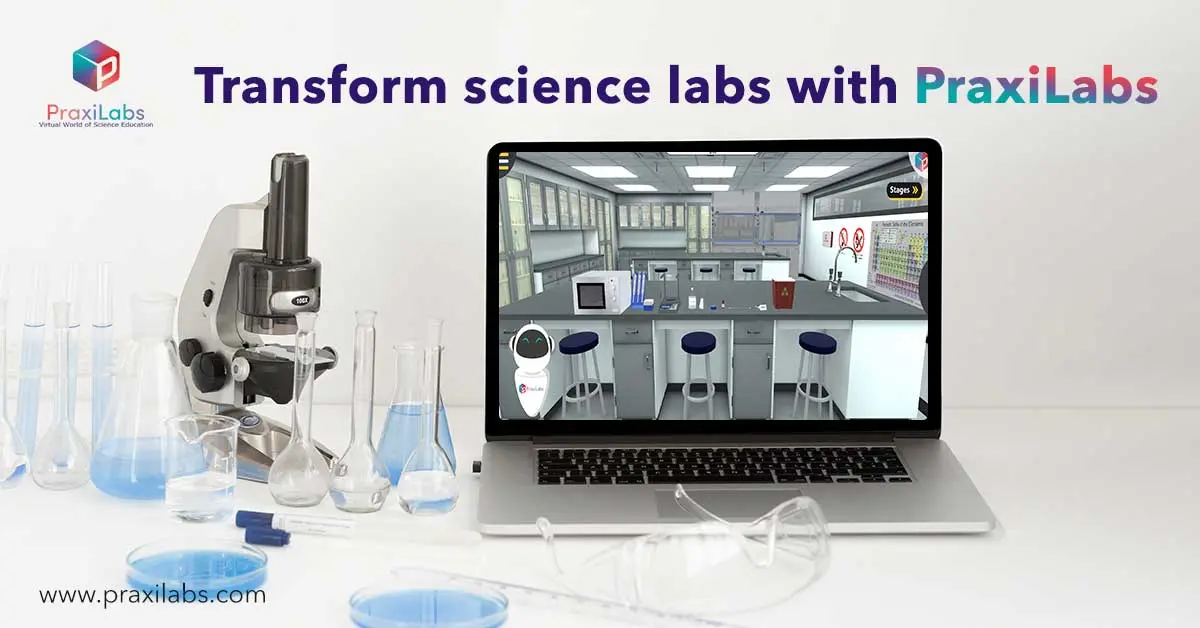
Transform science labs with PraxiLabs:
Conducting scientific experiments for the sciences through virtual laboratories has become an attractive and effective means for university students to explore and understand complex scientific methods and concepts.
Platforms like PraxiLabs provide immersive 3D simulations that allow students to carry out scientific experiments as if they were in a real laboratory.
Instead of merely studying theoretical formulas, students can actively test ideas, analyze results, and better understand how physical laws work in practice.
PraxiLabs Virtual Labs offers a wide range of scientific experiments covering the most important academic disciplines, allowing students to explore science in an interactive and safe way.
Some of the most prominent areas include:
Chemistry:
- Detection of basic radicals (Inorganic Chemistry).
- Organic Chemistry.
- Detection of acidic radicals (Inorganic Chemistry).
- General Chemistry.
- Analytical Chemistry.
- Electrochemistry.
Explore PraxiLabs virtual chemistry lab now
Physics:
- Heat and thermodynamics experiments.
- Mechanics.
- Properties of matter.
- Electricity.
- Magnetism.
- Modern Physics.
- Wave experiments.
Explore PraxiLabs virtual physics lab experiments
Biology:
- Physiology.
- Cell culture.
- Biochemistry.
- Toxicology.
- Bioenergy.
- Molecular Biology.
- Immunology.
- Microbiology
Visit PraxiLabs virtual biology lab for more simulations
Don’t miss the opportunity to enhance the learning experience within your institution — try it now and discover how virtual labs can elevate students’ understanding and confidence.
Book a demo today and start transitioning towards more innovative education!
Frequently Asked Questions
How simulation labs work?
They replicate real lab environments on personal devices, enabling users to manipulate variables, follow step-by-step guidance from a virtual assistant, and receive instant feedback.
What is the major benefit of a virtual lab?
The major benefit of a virtual lab is safe, flexible, and accessible experimentation. It allows students to perform experiments anytime and anywhere, without the risks, costs, or equipment limitations of a physical lab—while still gaining hands-on, interactive learning experience.