 PraxiLabs A virtual world of science

Last Updated on September 9, 2026 by Muhamed Elmesery
Imagine attending high school without being limited by a classroom, a timetable, or even a physical laboratory. Virtual high schools are transforming the way students learn by combining flexible education with interactive digital tools, from live classes and collaborative platforms to immersive virtual labs. But what really makes a virtual high school effective?
Let’s explore the key features of a virtual high school and see how technology can create a more engaging, flexible, and practical learning experience for today’s students.
Table of Contents
What is a virtual high school?
Virtual high school refers to a type of education delivered entirely online, enabling students to complete a rigorous academic schedule and attend classes from anywhere with an Internet connection.
At a virtual high school students can complete all their courses, assignments, and exams using a computer or tablet via the internet instead of attending a physical, brick-and-mortar classroom.
Virtual high schools use virtual labs and interactive lab simulations to complement or supplement physical science classes. These digital platforms let students conduct biology, chemistry, and physics experiments safely on computers or VR headsets.
Explore: Virtual Lab Schools As The Future of STEM Learning
Key features of a virtual high school:
A virtual high school uses digital platforms and technology to deliver education beyond the traditional classroom. Key features include:
Online learning environment:
Students access lessons, assignments, resources, and learning materials through digital platforms.
Flexible learning:
Students can learn from home or other locations and often have greater flexibility in managing their study time.
Interactive lessons:
Videos, animations, simulations, quizzes, and other digital resources make learning more engaging.
Virtual laboratories:
Science students can conduct simulated experiments and explore practical concepts online, even when they cannot access a physical laboratory.
Real-time communication:
Video conferencing, live classes, chats, and discussion boards help students communicate with teachers and classmates.
Digital assessments:
Online quizzes, assignments, and exams allow teachers to evaluate student progress and provide timely feedback.
Personalized learning:
Digital tools can help students learn at different speeds and access additional practice based on their individual needs.
Access to digital resources:
Students can use e-books, educational videos, simulations, databases, and other online learning materials.
Teacher support and collaboration:
Virtual schools provide digital channels for students to ask questions, receive guidance, and collaborate with their peers.
Technology-based STEM education:
Tools such as virtual labs can provide practical experiences that complement theoretical science instruction.
With platforms like PraxiLabs, virtual high schools can make science education more practical and interactive by giving students access to virtual experiments anytime and anywhere.
Benefits of switching to virtual learning for students:
Virtual high school online offers many benefits for students pursuing distance education:
- Students can study at their own convenience from the comfort of their home or other preferred locations.
- Teachers can provide individual support and targeted online feedback.
- Students do not need to worry about traveling from one place to another to attend classes, especially with busy schedules.
- Unlike traditional high schools, where classes are typically scheduled during specific hours, virtual high schools offer greater flexibility, allowing students to study at different times and from different locations.
- Even in the middle of the night, students can access the professional help they need to succeed in their most difficult subjects.
- The abundance of online teaching services means that students can find support in a wide range of subjects. Even in specialized subjects, students can access the professional guidance they need to succeed or, potentially, excel.
Explore: A Virtual Learning Environment for Modern Education
Virtual high school: Role of technology
Technology plays a central role in shaping the virtual high school experience, making education more flexible, interactive, and accessible. Through virtual classrooms, learning management systems, digital resources, and interactive simulations, students can engage with lessons beyond the traditional classroom.
For science subjects in particular, technologies such as virtual labs allow students to explore experiments, practice procedures, and understand complex concepts in a safe digital environment. Platforms like PraxiLabs can complement virtual high school programs and curricula by providing immersive science simulations that encourage hands-on learning, critical thinking, and experimentation.
As technology continues to evolve, its role in virtual high school goes beyond delivering lessons—it helps create a more engaging and student-centered learning experience.
Explore: Advantages of Simulation Based Learning in Classrooms
How do virtual labs support going virtual in high schools?
Virtual labs can support the transition to virtual learning in high schools by providing students with opportunities to conduct experiments with or without internet access, so that students do not need to be present in a laboratory to participate in an experiment.
Key ways virtual labs support virtual high schools:
- Provide hands-on learning online
Students can perform virtual experiments and interact with scientific equipment without being physically present in a real school laboratory.
- Make science more engaging
Interactive simulations allow students to explore concepts through experimentation rather than relying only on textbooks, videos, or lectures.
- Allow students to learn at their own pace
Virtual labs can be accessed repeatedly, giving students the opportunity to review procedures, repeat experiments, and learn from mistakes.
- Support safe experimentation
Students can explore experiments involving chemicals, equipment, or complex procedures in a controlled digital environment without physical safety risks.
- Reduce the need for physical lab resources
Schools can supplement or partially replace physical laboratory activities with digital simulations, reducing dependence on expensive equipment and consumable materials.
- Support remote and hybrid learning
Virtual labs make it easier for students to continue practical science education when learning from home or when access to a physical laboratory is limited.
- Improve understanding of complex concepts
Interactive simulations can help students visualize processes that may be difficult to understand through traditional instruction alone.
- Help teachers monitor learning
Several virtual lab platforms can support structured activities and assessments, helping teachers evaluate students’ understanding and experimental skills.
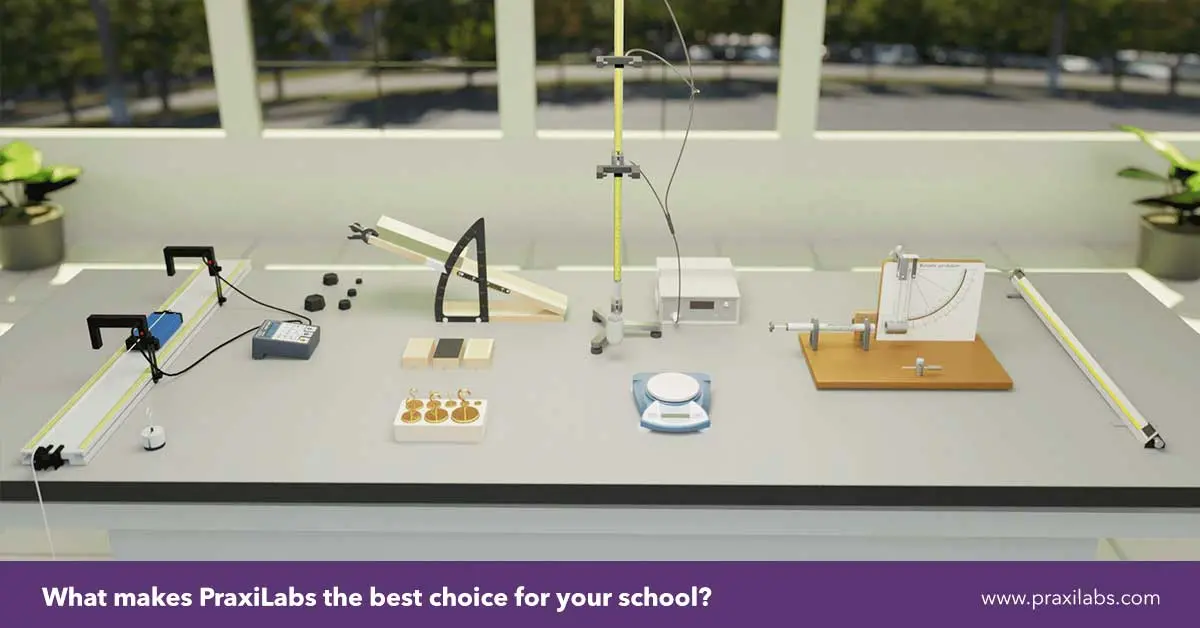
Why makes PraxiLabs the best choice for your school?
Choosing the right virtual lab platform can help schools deliver engaging, practical science education both in the classroom and online. PraxiLabs combines interactive simulations with flexible learning tools to support students and teachers across different learning environments.
Immersive 3D Design with Purpose
Unlike basic virtual labs that simply demonstrate procedures, PraxiLabs simulations are built for active learning and discovery.
Our photorealistic 3D environments create genuine engagement while maintaining scientific accuracy. Students don’t just watch—they manipulate, experiment, and learn through doing. Every element of the interface is designed to support learning outcomes, not distract from them.
Advanced Assessment and Customization
The Question Bank feature empowers educators to create custom quizzes aligned with their curriculum. Instructors can:
- Design questions in multiple formats (single choice, multiple choice, and true/false)
- Set difficulty levels and assign points based on learning objectives
- Configure randomization, time limits, and attempt policies
- Receive detailed performance analytics on student understanding
- Provide personalized feedback that goes beyond simple right/wrong answers
Cost-Effective at Scale
Traditional laboratory equipment, chemicals, and maintenance can cost $50,000–$500,000+ annually for a single institution. PraxiLabs delivers unlimited student access, unlimited experiment repetitions, and zero chemical waste at a fraction of that cost. When amortized across student populations, the per-student cost becomes negligible while the educational value multiplies.
Give Your Students a Better Way to Learn Science
Move beyond traditional science instruction with PraxiLabs’ virtual labs. Equip your school with an engaging, safe, and flexible way to bring practical experimentation into every learning environment.
FAQs
How does virtual high school work?
At virtual high school students use a computer and internet connection to access lessons, submit assignments, and communicate with teachers via email or video calls, earning official high school credits and diplomas without attending a physical building.
Is virtual high school good?
The research on the effectiveness of virtual high schools does indeed show a mix of potential benefits alongside limitations in the evidence supporting them. While studies highlight advantages like improved educational access, increasing innovations in higher education, better student outcomes, and administrative efficiency, the data supporting these claims remains limited.