 PraxiLabs A virtual world of science

Last Updated on October 14, 2026 by Muhamed Elmesery
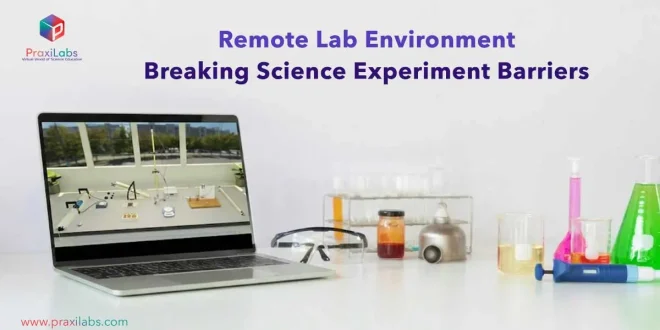
A remote lab environment allows students to conduct science experiments from any location, eliminating the physical constraints that once limited hands-on learning. Universities are turning to these digital setups to overcome space shortages, equipment costs, and scheduling conflicts that hold back traditional lab programs, all while keeping practical training rigorous and measurable. This article breaks down how these platforms remove common barriers to science education, and how PraxiLabs delivers this experience for institutions seeking a modern, flexible alternative to conventional laboratories.
Table of Contents
What is a remote lab environment?
A remote lab environment is a digital platform that recreates real laboratory conditions, letting students run experiments through their browser instead of a physical bench.
- Life sciences: culturing virtual cells and observing microbial behavior in real time.
- Physical sciences: titrating solutions, measuring force and motion, and tracking reaction changes.
Students actively manipulate variables and troubleshoot errors as they go. That interactivity is what separates a genuine remote science labs experience from passive video content.
Why it matters for institutions
Departments gain a way to standardize practical training across large student cohorts, without depending on how many physical benches, chemicals, or instructors happen to be available at any given time.
A safer starting point for beginners
First-year students in particular benefit from a setting where they can make mistakes with hazardous reactions or delicate equipment safely, before ever handling the real materials in person.
Features of a science experiment remote lab environment:
A strong remote lab environment shares several core features that make it usable at scale across departments and campuses.
- Realistic 3D simulations of lab equipment and reactions.
- Step-by-step guided procedures for each experiment.
- Instant feedback on student actions and results.
- Cross-device access from any browser or location.
These features replicate the rigor of physical labs while removing equipment wear and limited lab hours, giving students consistent access whether they’re on campus or at home.
Built for everyday classroom use
Because the platform runs entirely online, IT teams avoid managing physical hardware, and instructors can assign the same experiment to an entire class without booking lab time weeks in advance.
Consistent quality across sections
Every student sees the same simulation, the same equipment behavior, and the same guided steps, which removes the variation that often comes from different instructors running the same lab manually.
Explore: Digital Lab Platform for Virtual Experiments and Practical Learning
How do interactive simulations develop students’ practical skills?
Interactive simulations push students to apply theory rather than memorize it. Each remote lab environment session requires learners to make decisions and interpret results in real time.
Practicing without real-world risk
Because mistakes carry no real cost, students can experiment freely and repeat attempts as needed. Recent virtual lab research shows this repetition strengthens retention and confidence, sharpening skills that carry into advanced coursework.
Building lasting skills
Skills like data interpretation and troubleshooting carry over directly into fieldwork, internships, and research projects, since the underlying reasoning process stays the same regardless of setting.
Explore: Integrating Virtual Simulation Training in the International Universities
How can virtual Labs support educators and course management?
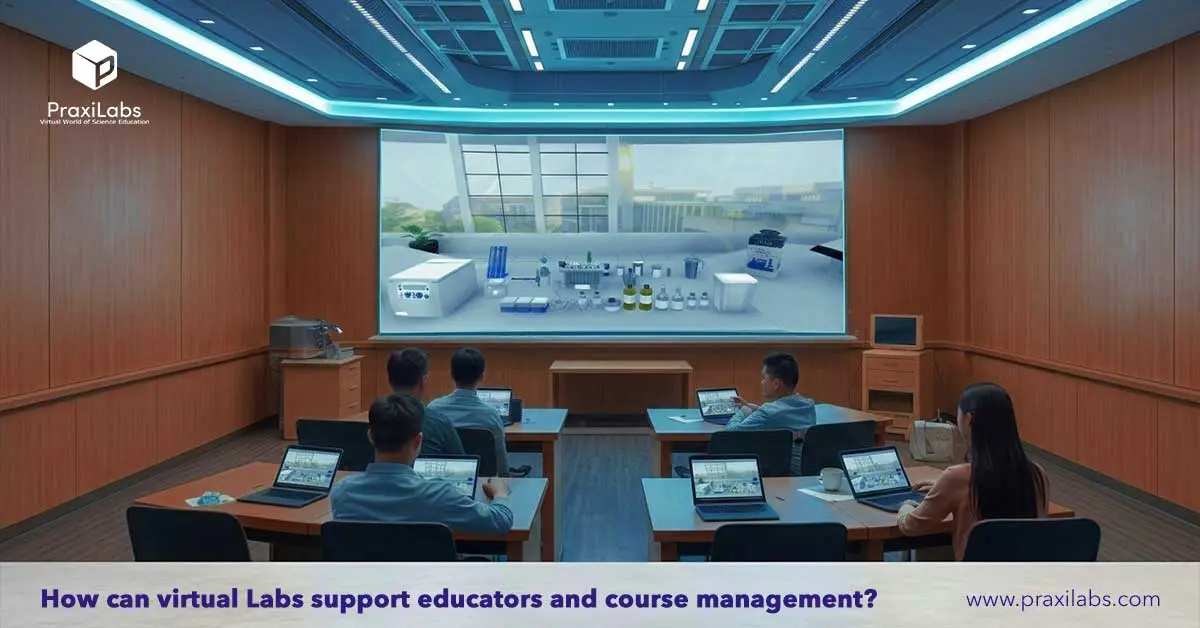
Educators managing large cohorts benefit from the structure a remote learning environment provides, replacing scattered physical scheduling sheets with one centralized system.
- Automated grading of experiment outcomes.
- Progress tracking across entire class rosters.
- Easy assignment of specific experiments by topic.
With these tools, instructors spend less time on scheduling and administrative logistics, and gain a clearer, experiment-by-experiment view of where students need support.
Reducing manual work
Automated grading alone can save instructors hours each week that would otherwise go toward marking lab reports by hand, freeing that time for direct, one-on-one student support.
Supporting hybrid and online programs
The same course management tools work whether a class meets on campus, online, or in a hybrid format, so a single setup covers different delivery models without extra configuration.
Overcome expanding obstacles in university labs with virtual labs:
Physical lab expansion is expensive and slow, often requiring new equipment and extended safety training. A remote lab environment sidesteps these obstacles by scaling digitally rather than physically.
- No new equipment purchases for enrollment growth.
- No calibration or maintenance schedules to manage.
- No glassware or chemical inventory to track.
- Faster rollout of new experiment types.
- Continued access even as facilities reach capacity.
A recent accessibility review found virtual platforms can be designed to reach a wider range of students, including those affected by limited internet connectivity or working in different languages and cultural contexts.
Scaling without new construction
A growing enrollment no longer forces a choice between turning students away or funding a costly, multi-year lab expansion project that competes with other academic priorities.
Keeping pace with rising demand
As more institutions adopt digital science instruction, platforms built for scale help departments meet demand without the multi-year lead time that physical lab construction typically requires.
Explore: Why Every University Should Use a STEM Virtual Lab?
How does PraxiLabs deliver an interactive remote lab environment?
PraxiLabs delivers a complete remote science labs experience, covering biology, chemistry, and physics through realistic, browser-based simulations.
- AI-powered lab assistant “Oxi” for real-time guidance.
- Custom quiz builder linked directly to experiments.
- Bilingual access in Arabic and English.
- Integration with LMS platforms like Moodle and Canvas.
- Coverage across 20+ science branches, from biology to physics.
- Round-the-clock technical support for institutions.
These capabilities let institutions deploy a complete program without building new infrastructure, while instructors retain full visibility into student performance.
Built to grow with the institution
New courses and departments can adopt the same platform without procuring separate licenses or hardware for each one, which simplifies long-term academic planning and budgeting.
What ROI can universities expect from adopting PraxiLabs?
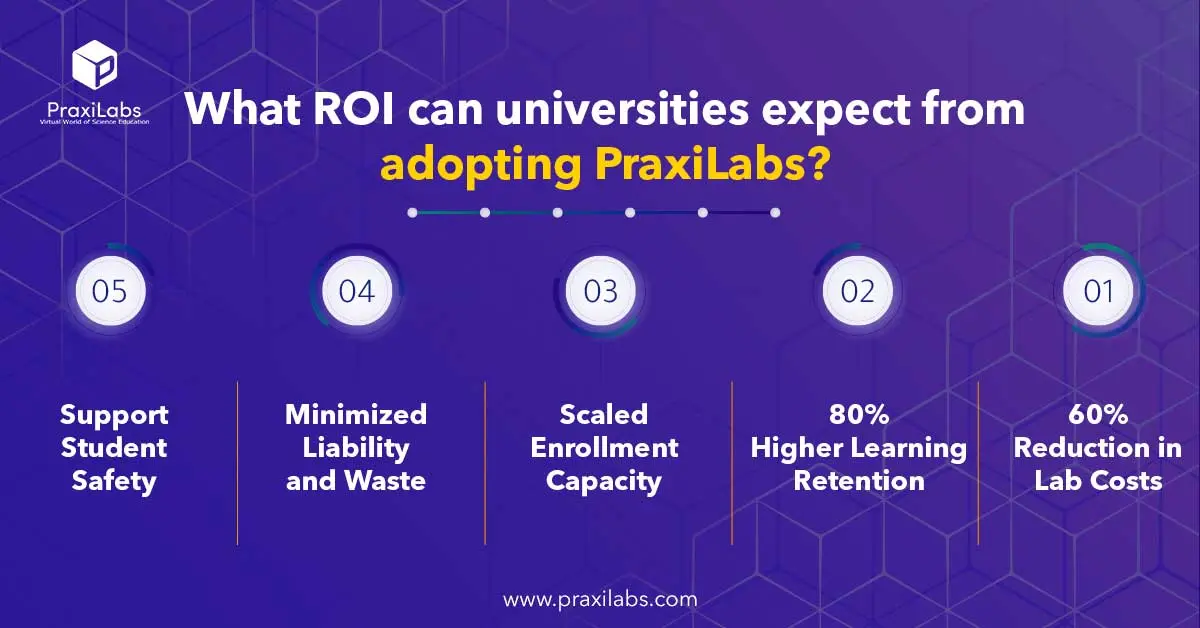
Adopting a remote lab environment like PraxiLabs delivers measurable returns beyond simple cost savings, reducing spending on physical materials, equipment, and lab space.
Where the returns show up
A recent market growth report projects continued growth in this sector over the coming years. Faster LMS integration and round-the-clock support mean institutions can launch programs quickly and keep that investment paying off well past rollout.
Faster time to value
Because LMS integration can be completed within 24 hours, institutions start seeing usage and engagement data within the first week, rather than waiting an entire semester to judge results.
A track record institutions can check
PraxiLabs currently supports more than 2.5 million active users across 160+ countries, a scale that gives adopting institutions confidence the platform is tested well beyond a single campus.
Explore The Best Virtual Labs Software for Hands-On Training
FAQs
What does a virtual lab look like?
A virtual lab is a browser-based 3D simulation of real lab equipment, letting students run experiments interactively with guided steps and instant feedback.
Are virtual labs better than physical labs?
Virtual labs offer more flexibility, safety, and repeatable practice, though physical labs still provide unique hands-on equipment familiarity.