 PraxiLabs A virtual world of science

Last Updated on November 4, 2026 by Muhamed Elmesery
Science is best learned by doing, not simply by reading about theories and memorizing facts. For students learning from home, home education science experiments provide an opportunity to turn scientific concepts into practical and immersive learning experiences.
From observing chemical reactions to exploring physics principles, experiments can help students connect theory with real-world applications. However, conducting physics, biology, or chemistry experiments at home can also involve challenges such as limited equipment, safety concerns, and the cost of laboratory materials.
Virtual labs offer an effective way to overcome many of these limitations. With interactive simulations, students can perform experiments digitally, repeat procedures, and explore scientific concepts in a controlled learning environment.
Table of Contents
What are home education science experiments?
Home education science experiments are practical activities designed to help students explore scientific concepts while learning outside a traditional classroom or laboratory. They can range from simple experiments using household materials to more advanced activities conducted through digital simulations and virtual laboratories.
For example, students may investigate concepts such as density, motion, chemical reactions, electricity, or biology through hands-on activities. Virtual experiments can complement these activities by allowing learners to explore laboratory procedures that may not be practical or safe to conduct at home.
The goal is to make science more experiential. Instead of only learning that a scientific principle exists, students can observe how it works, manipulate variables, collect results, and draw conclusions from their observations.
Core benefits of home education science experiments:
Integrating experiments into home education can provide several benefits for students:
- Make abstract concepts easier to understand: Experiments allow students to visualize scientific principles and connect theoretical knowledge with observable results.
- Develop critical-thinking skills: Students can formulate hypotheses, analyze results, identify patterns, and explain their observations.
- Encourage independent learning: Home-based experiments give students the opportunity to explore scientific questions and learn through investigation.
- Build problem-solving skills: When an experiment produces unexpected results, students can investigate possible causes and consider alternative approaches.
- Increase engagement: Interactive activities can make science more engaging than relying exclusively on textbooks or lectures.
- Develop scientific skills: Students can practice following procedures, recording observations, interpreting data, and reaching evidence-based conclusions.
- Support repeated practice: Digital experiments can often be repeated without consuming physical laboratory materials, allowing students to learn through trial and error.
Together, these benefits can make science education more active, exploratory, and student-centered.
Explore: Engaging Science Experiments in Virtual Labs
How do virtual labs support home education science experiments?
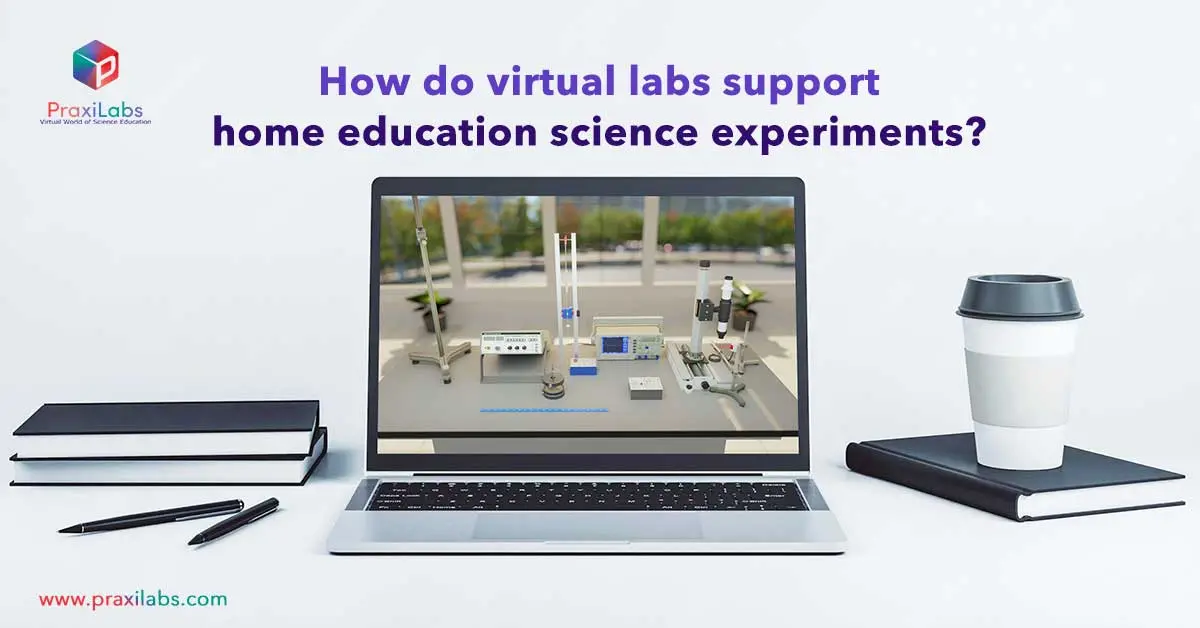
Virtual labs provide students with access to simulated laboratory environments through digital devices. They can complement physical home science experiments by giving learners opportunities to explore experiments that require specialized equipment or laboratory conditions.
For home educators, virtual labs can also address practical limitations. A student may not have access to a microscope, advanced measuring instruments, chemical materials, or other laboratory equipment at home. A virtual laboratory can simulate these tools and procedures digitally.
Students can use virtual labs to:
- Explore laboratory procedures step by step.
- Interact with virtual equipment and materials.
- Change experimental variables and observe outcomes.
- Repeat experiments to reinforce understanding.
- Practice laboratory techniques before performing physical experiments.
- Explore experiments that may not be suitable for a home environment.
This makes virtual labs a useful complement to hands-on home education science experiments rather than a replacement for every type of practical activity.
Explore: Conducting Inexpensive Science Experiments Using Virtual Labs
How do remote labs improve flexible learning for students?
Flexible learning allows students to engage with educational content according to their individual schedules, learning needs, and available resources. Remote and virtual laboratory solutions can contribute to this flexibility by extending practical science learning beyond the physical classroom.
Students can access digital laboratory activities from different learning environments, making them particularly useful for homeschoolers, distance learners, and students following blended learning programs.
Remote laboratory experiences can also support self-paced learning. Students can spend additional time reviewing a challenging experiment, repeat activities when necessary, and revisit scientific concepts without depending entirely on a fixed classroom laboratory schedule.
For educators and parents, digital labs can provide another way to introduce practical science activities and biology experiments at home while reducing dependence on physical laboratory infrastructure.
Explore: Why Educational Simulations are Essential in Modern Education?
How does PraxiLabs support home education science experiments?
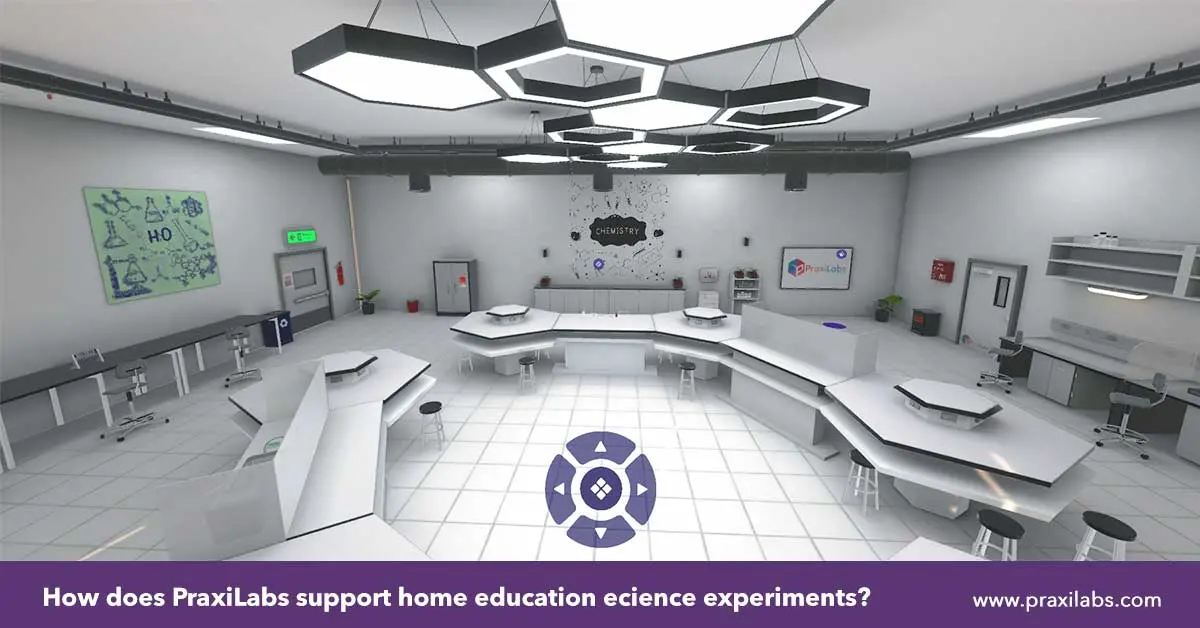
PraxiLabs supports science education through interactive virtual simulations that allow learners to explore experiments in a digital environment.
For home education, PraxiLabs can complement chemistry, biology, and physics experiments at home by giving students access to simulated laboratory experiences that may be difficult to recreate at home. Learners can interact with virtual laboratory equipment, follow experimental procedures, and explore scientific concepts through simulation.
PraxiLabs offers virtual experiments across major science disciplines, including physics, chemistry, and biology. This allows educators to incorporate practical digital activities into different areas of a science curriculum.
For example, students can explore physics experiments related to mechanics, electricity, and thermodynamics, conduct chemistry experiments involving reactions and analysis, and investigate biology concepts through simulated laboratory activities.
The interactive format can also encourage students to learn through experimentation rather than simply reading instructions. By exploring procedures and observing results, learners can strengthen their understanding of how scientific concepts are applied in laboratory settings.
For parents and educators designing home education programs, PraxiLabs can therefore serve as a digital laboratory resource that complements textbooks, demonstrations, and hands-on experiments.
Explore: Why Every University Should Use a STEM Virtual Lab?
Be one of PraxiLabs’ featured partners and clients
Want to bring more practical science learning into your home education or digital learning program?
Partner with PraxiLabs to provide learners with interactive virtual laboratory experiences across physics, chemistry, and biology.
Whether you are developing a homeschool program, supporting distance learning, or building a modern science education solution, PraxiLabs can help you provide students with more opportunities to explore, experiment, and learn by doing.
Some of PraxiLabs’ featured clients and partners include:
Middle East
- United Arab Emirates Ministry of Education – all public schools.
- Education Pathways, UAE.
- King Saud University, Saudi Arabia.
- King Faisal University, Saudi Arabia.
- King Khalid University, Saudi Arabia.
- AlRayan Schools, Oman.
Egypt
- Ain Shams University.
- Banha National University.
- Al Azhar University.
- Alexandria University.
- Cairo University.
- Galala University.
North America and Europe
- D’Youville University, USA.
- LaMoille High School, USA.
- Ulster University, UK.
- EGraduate College, UK.
- Naples University, Italy.
- Carol Davila University of Medicine and Pharmacy, Romania.
- Universitat Politècnica de València, Spain.
- Westfield Secondary School, Canada.
- Universidad Autónoma de San Luis de Potosí, Mexico.
Asia and Africa
- Covenant University, Nigeria.
- AMA University, Philippines.
- De La Salle Andres Soriano Memorial College, Philippines.
- University of Science and Technology of Southern Philippines.
- BroadTech Pte Ltd, Singapore.
- Kotelawala Defence University, Sri Lanka.
These partnerships demonstrate how virtual laboratories can support science education across different educational settings, from universities and medical institutions to schools and public education systems.
FAQs
Are virtual experiments scientifically accurate?
Yes. Well-designed virtual experiments are based on established scientific principles, procedures, and data, providing accurate simulations of real laboratory experiments.
Are virtual labs suitable for homeschooling?
Yes. Virtual labs are suitable for homeschooling because they allow students to safely perform interactive homeschool science experiments, practice scientific concepts, and learn at their own pace from home.