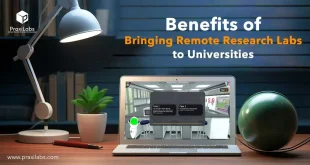
Last Updated on November 8, 2026 by Muhamed Elmesery Remote research labs give scientists and students a way to run real experiments without needing to be physically present in a shared laboratory space. For universities juggling limited bench space, equipment costs, and growing enrollment, this shift isn’t just convenient, it’s often what makes expanded research and teaching programs possible at …
Read More »Muhamed Elmesery
Adapting Science Experiments for Remote Learning
Last Updated on October 26, 2026 by Muhamed Elmesery Adapting science experiments for remote learning has become a practical necessity for universities balancing flexible schedules with rigorous hands-on instruction. When students can’t reach a physical lab, the challenge isn’t whether practical work matters, but how to preserve its value outside campus walls, without cutting corners on academic quality. This article …
Read More »Remote Lab Environment: Breaking Science Experiment Barriers
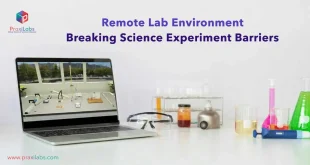
Last Updated on October 14, 2026 by Muhamed Elmesery A remote lab environment allows students to conduct science experiments from any location, eliminating the physical constraints that once limited hands-on learning. Universities are turning to these digital setups to overcome space shortages, equipment costs, and scheduling conflicts that hold back traditional lab programs, all while keeping practical training rigorous and …
Read More »How do science teaching labs shape the future of interactive learning?
Last Updated on October 11, 2026 by Muhamed Elmesery Science teaching labs have shifted from a room full of glassware to something a student can open on a laptop between classes. The shift didn’t happen because physical labs stopped working, but because scheduling one station for forty students never scaled well in the first place. A virtual setup lets every …
Read More »Changes and Forms of Energy Virtual Lab
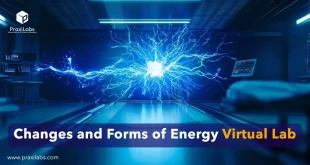
Last Updated on September 23, 2026 by Muhamed Elmesery A forms of energy virtual lab lets students trigger an energy change, from a swinging pendulum losing height to gain speed, to a battery powering a bulb, and watch the transformation happen on screen. Textbook diagrams show these changes as static arrows on a page, but a simulation lets a learner …
Read More »
PraxiLabs A virtual world of science