 PraxiLabs A virtual world of science

Last Updated on August 9, 2026 by Muhamed Elmesery
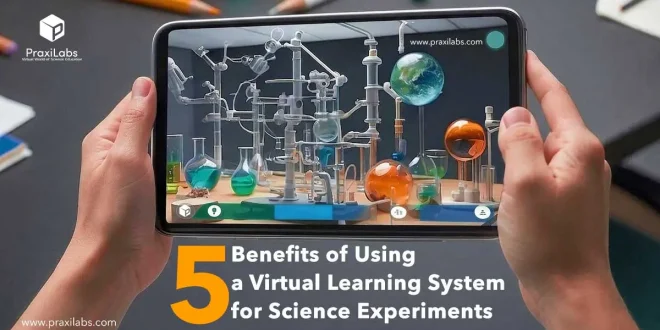
A virtual learning system gives science students a way to run experiments, test variables, and see results instantly, all without needing a physical lab. Traditional science classes often limit hands-on practice due to cost, safety, or scheduling constraints, leaving many students with only theoretical exposure to key concepts.
By moving experiments into an online environment, students gain repeated access to realistic simulations that build understanding through direct interaction rather than passive observation. This shift toward virtual, interactive science education is reshaping how institutions teach experimental concepts at scale.
Table of Contents
What is a virtual learning system?
A virtual learning system is an online environment where students complete science experiments through realistic 3D simulations instead of physical equipment. It typically brings together several connected elements:
- Interactive simulations that model real lab equipment, chemical reactions, and biological processes with accurate visual detail, so students recognize the same tools they would encounter in a physical setting.
- Step-by-step guidance that walks students through each procedure, with instant results the moment they run an experiment, rather than waiting for a scheduled lab session.
- Access from any device with an internet connection, a feature common across most virtual learning systems today, without scheduling a physical lab slot or competing for shared equipment.
- Repeatable experiment design, letting the same procedure be run dozens of times without depleting any physical resource or requiring a technician to reset equipment.
- Progress tracking and built-in documentation of each attempt, so students and instructors can compare results across sessions over time and identify where understanding is still developing.
Benefits of integrating a virtual learning system into science learning:
Bringing a virtual learning system into science classrooms changes how students experience experimentation, with advantages that reach both learners and institutions:
- Unlimited repetition of experiments without consuming physical materials or equipment, which matters most for procedures that would otherwise be limited by budget.
- Safer exploration of reactions or procedures that would be risky or costly in a physical setting, removing the need for protective equipment or supervised handling.
- Lower costs for institutions, since virtual equipment does not need ongoing replacement, calibration, or maintenance across multiple semesters.
- Consistent access for students studying remotely or across different campuses, without depending on a single physical lab or shared scheduling system.
- A bridge between theoretical lessons and hands-on practice that virtual e learning system formats are well suited to provide, especially for concepts that are hard to visualize from a textbook alone.
- Flexibility for institutions to scale science education to more students without expanding physical lab space or hiring additional lab technicians.
- Standardized experiment conditions for every student, removing the variability that comes from shared physical equipment or inconsistent setup between class sections.
- Reduced scheduling conflicts, since a virtual system does not require students to queue for shared lab stations during limited class hours.
Explore: 5 Reasons Why Virtual Learning Solutions Became Essential
What happens when AI meets science education?
Artificial intelligence adds a layer of personalization that a traditional lab setup cannot offer on its own, and it is quickly becoming a core part of any modern virtual learning system:
- Real-time guidance that adapts to each student’s pace and previous answers, rather than offering the same instructions to everyone regardless of where they are in the experiment.
- Automated grading that removes hours of manual assessment work for instructors, freeing time for direct student support instead of repetitive scoring.
- Pattern recognition across student performance, highlighting struggling concepts and identifying at-risk students early, often before a formal assessment would reveal the same gap.
- Continuous, scalable support that improves over time and grows with enrollment without requiring additional teaching staff or extending office hours.
Benefits of virtual labs’ instant feedback on students:
Instant feedback changes how students engage with experiments inside a virtual learning system, since they no longer wait days for graded results:
- Faster correction of misunderstandings, before an incorrect method becomes a habit that is harder to unlearn later in the course.
- Greater confidence to try different approaches, since mistakes carry no material cost or safety risk and can be reversed instantly.
- Higher engagement, as immediate results keep students connected to the experiment’s outcome rather than losing interest while waiting for a grade.
- Clearer progress tracking for both students and instructors throughout a virtual education system, making it easier to spot patterns across an entire class.
- More opportunities for self-correction, since students can repeat a step immediately after seeing where they went wrong, without needing to schedule another session.
- Reduced anxiety and stronger retention of correct techniques, since low-stakes repetition reinforces the right approach over time rather than punishing a single mistake.
Explore: Using Virtual Labs for Hands on Science Learning Experience
Introducing PraxiLabs as a science virtual learning system:
PraxiLabs brings these advantages together into a single platform built specifically for science education:
- Over 2.5 million active users across more than 160 countries, spanning schools, universities, and training institutions.
- More than 210 science simulations spanning over 20 branches, including biology, chemistry, and physics, giving instructors flexibility across subjects.
- Oxi, an AI lab assistant providing real-time personalized guidance, paired with a custom quiz builder offering automated grading tied directly to each experiment.
- Bilingual access, with experiments available in both Arabic and English, through a single consistent interface across every science branch on the platform.
- A design informed by systematic research on virtual labs, which finds these tools broadly improve accessibility and engagement across higher education institutions worldwide.
How can PraxiLabs elevate institutions’ learning experience?
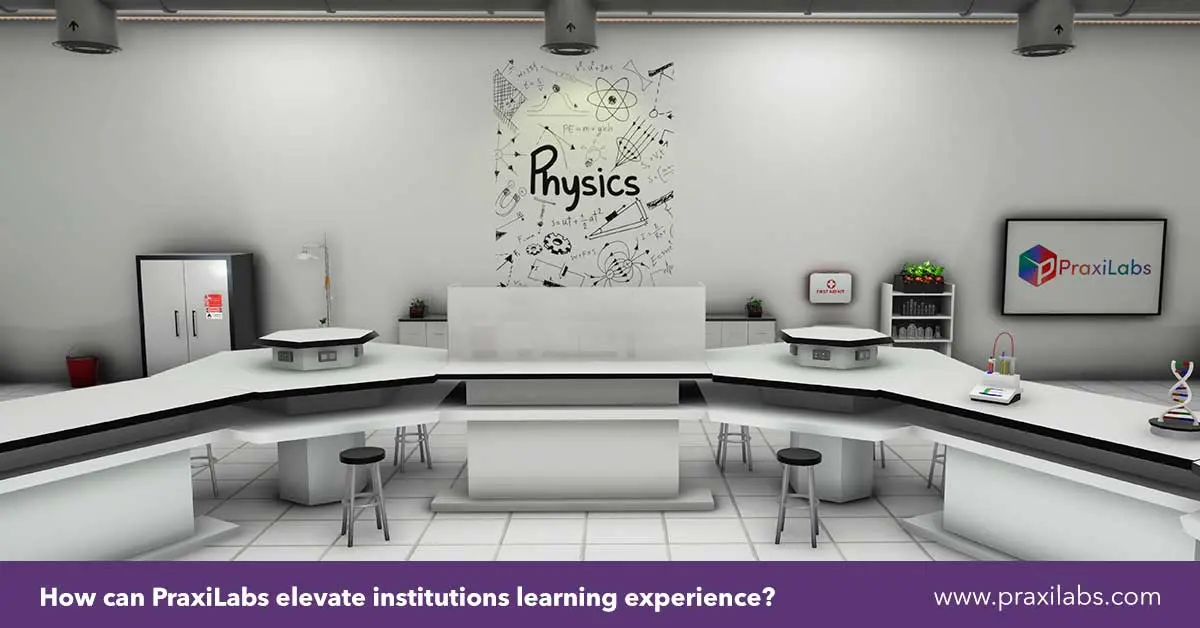
Institutions adopting PraxiLabs as their virtual learning system gain measurable improvements across cost, engagement, and outcomes:
- A verified 60 percent reduction in lab-related costs compared to physical setups, freeing budget for other academic priorities.
- A verified 80 percent improvement in learning retention among students using the platform compared to lecture-only instruction.
- LMS integration with Moodle, Canvas, and Blackboard completed within 24 hours, minimizing setup time for IT departments.
- Around-the-clock technical support for both institutions and individual students, regardless of time zone or semester schedule.
- Eleven global awards recognizing the platform’s impact on science education across different regions and institution types.
- Demand for this kind of simulation-based learning continues to grow, with the broader market projected at a CAGR of 8.57% between 2026 and 2030.
- A model supported by peer-reviewed findings linking virtual lab formats to stronger student outcomes than lecture-only instruction alone.
- Reduced dependency on physical lab renovations or expansions as student numbers grow year over year, even during periods of rapid enrollment.
- A single vendor relationship covering simulations, assessment tools, and LMS connectivity, simplifying procurement for IT and academic departments alike.
FAQs
What are some benefits of virtual learning?
Virtual learning offers unlimited experiment repetition, lower costs, safer exploration of risky procedures, and consistent access regardless of location or schedule.
What is the role of AI in virtual labs?
AI personalizes guidance in real time, automates grading, and highlights where students or classes need additional support during experiments.